Disclosure: This article contains affiliate links. If you buy through them, I may earn a small commission at no extra cost to you.
Table of Contents
What is Rfissa?
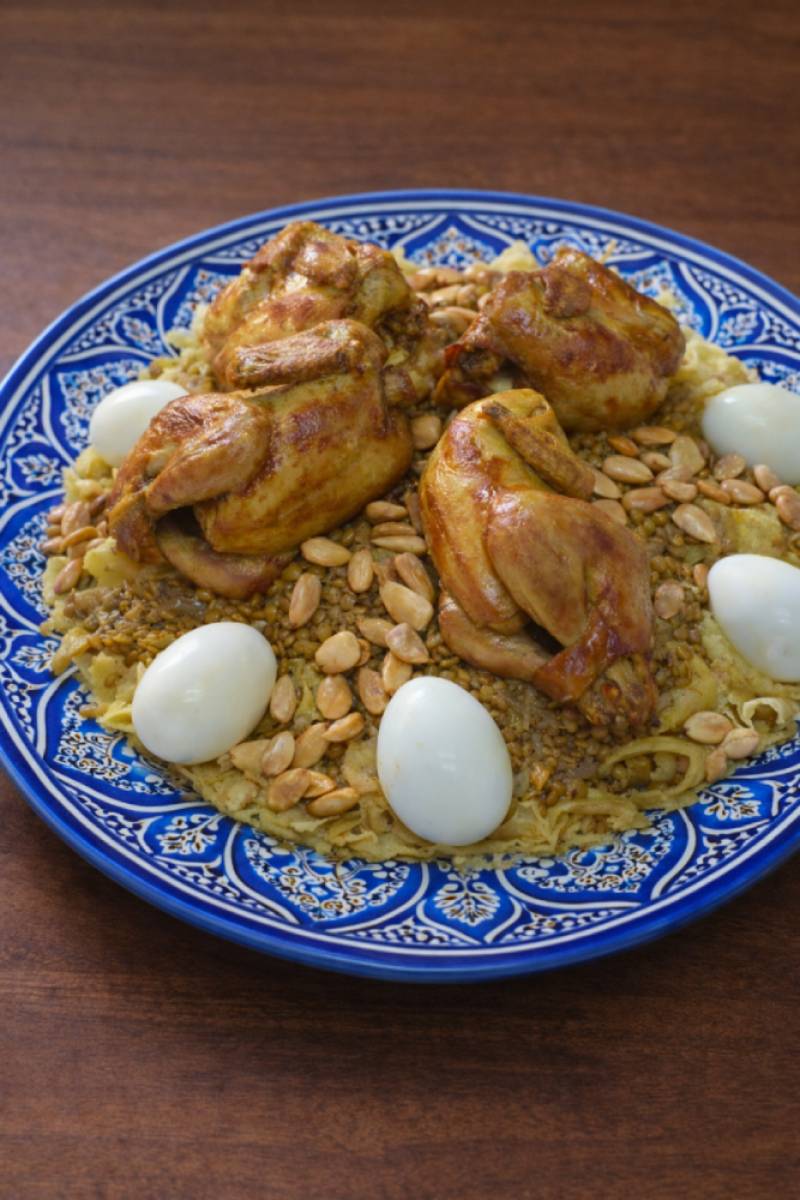
Rfissa is a traditional Moroccan dish made with chicken, lentils, and trid, a thin flatbread. It is a rich and comforting meal often served during special occasions and family gatherings.
Rfissa: A Typical Moroccan Meal We Save for Special Days
Rfissa… it doesn’t start in a pot.
It starts in a big house. A special day. When the family shows up. When the kitchen gets loud.
This isn’t an everyday meal.
This is a typical Moroccan meal we make for gatherings. For religious holidays. For those days when the grandparents’ home feels like the center of the world.
When I was a kid, I didn’t help much. I just watched.
My aunts. Their daughters. My uncles’ daughters, too.
All of them were packed into that big kitchen around my grandmother.
Everybody had a job.
One peeling onions, eyes burning, still laughing.
One kneading dough, hands shiny with oil, smacking the bowl as she means it.
Another watching the heat, lifting the lid just a little—steam hitting her face like a warm slap.
And my grandmother… she didn’t rush.
She didn’t shout.
She tasted. She listened.
She’d say one quiet line—”a little more salt… slowly”—, and everyone moved as they understood.
You could smell it all.
Garlic in the air.
Smen—strong, deep, not for beginners, but that’s what makes it taste like home.
Saffron soaking in warm water, turning gold right in the glass.
Today I’m going to show you Rfissa the way we make it for real.
Not the rushed version. Not the “close enough” version.
The one with thin trid, tender chicken, lentils that melt, and broth that sinks into the bread as it belongs there.
🧾 Glossary of Moroccan Terms in This Recipe
Before we go deeper into the story and the step-by-step recipe, let’s take a moment to clear up a few Moroccan words that you’ll see throughout this article.
You’ll come across names like smen, trid, or halba — ingredients and techniques that are deeply rooted in Moroccan cooking, but may not be familiar if you didn’t grow up with them.
No worries — you don’t need to speak Darija (Moroccan Arabic) to follow this recipe.
Below is a simple glossary to help you understand these key Moroccan terms, so you can keep reading (and cooking) with confidence.
Let’s break them down 👇
| Term | Explanation |
| Rfissa | A traditional Moroccan dish with trid, chicken, lentils, and broth. |
| Smen | Aged fermented butter, rich in aroma, used in traditional cooking. |
| Trid | Thin flatbread, hand-torn and steamed. Forms the base of Rfissa. |
| Halba | Fenugreek seeds. Soaked to reduce bitterness, adds deep earthy flavor. |
| Msemen | Square layered Moroccan bread. Sometimes replaces trid. |
| Gassaa | Large round Moroccan dish used for serving communal meals. |
| Coquelet | Cornish hen: Small young chicken, ideal for broth. |
| Ras el hanout | Moroccan spice blend with up to 20 spices. Used sparingly. |
Some of the links below are affiliate links. This means I may earn a small commission if you choose to buy, at no extra cost to you.
Equipment You’ll Need for Rfissa
To make this rfissa recipe the traditional way, a few essential tools can make a big difference:
Couscoussier (Traditional Steamer)
👉 👉 View the Couscoussier 6L Moroccan Steamer Pot on Amazon
Traditional Moroccan steamer used to cook trid and build rich broth for authentic recipes.
A couscoussier is the most essential tool for making an authentic rfissa recipe. It consists of two stacked pots: the bottom cooks the chicken and lentils in a rich broth, while the top gently steams the trid. This traditional method helps preserve moisture and gives Rfissa its signature texture and depth of flavor.
Large Pot or Dutch Oven (for Chicken & Broth)
Lodge Essential Enamel Cast Iron Dutch Oven – 6 Quart
Versatile cast iron Dutch oven ideal for slow cooking, braising, and building rich flavorful broths.
👉 👉 View the Lodge Dutch Oven on Amazon
A large Dutch oven is essential for cooking the chicken and building a rich, flavorful broth. Its heavy cast iron structure retains heat extremely well, allowing spices, lentils, and onions to slowly develop depth—an important part of an authentic rfissa recipe.
Flat Pan or Griddle (for Trid)
Nonstick Crepe Pan 10 Inch
Flat pan ideal for cooking thin breads like trid evenly without sticking.
👉 👉 View a flat pan for trid on Amazon
A flat pan or griddle is essential for cooking trid, the thin bread used in this rfissa recipe. Its wide surface allows you to spread the dough evenly and cook it quickly without tearing, helping you achieve soft and flexible layers.
Why Rfissa Is a Typical Moroccan Meal
Rfissa has a place in Moroccan cooking that’s hard to explain if you’ve never seen it made in a full house. It’s not a quick weeknight dish. It’s the kind of meal you plan for—because it’s tied to people, tradition, and those moments where everyone ends up around the same table. When Moroccans say “we’re making Rfissa,” it usually means something is being celebrated… or someone is being cared for.
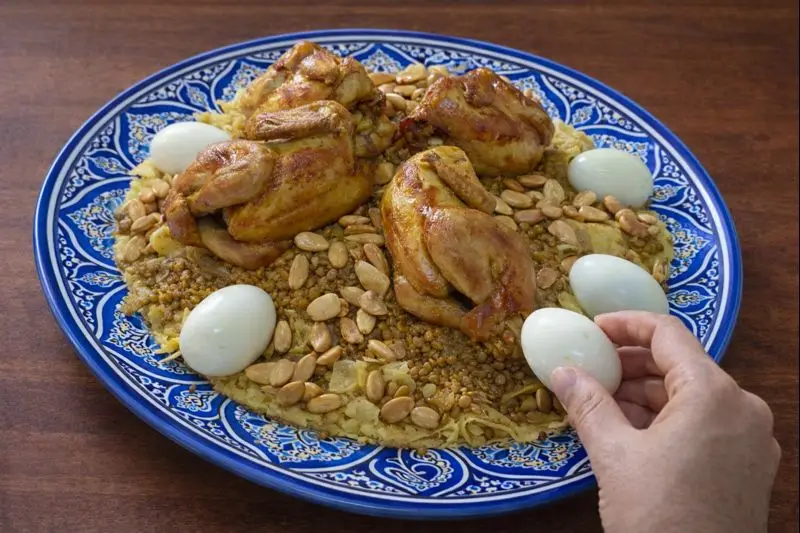
Rfissa in Moroccan homes: feasts, family, and tradition
In Morocco, we don’t make Rfissa when we’re rushing.
We make it when the house is full.
You know those days… shoes at the door, voices in the hallway, kids running between legs.
The table gets bigger without anyone saying it. Somebody brings extra plates. Somebody tears bread with their hands before they even sit.
Rfissa belongs to that kind of day.
A dish that asks for people. For time. For patience.
Because it’s not one person cooking alone.
It’s a kitchen with roles.
One is on onions. One is on dough. One watches the pot.
And somebody older—always—keeps the rhythm.
In our homes, Rfissa isn’t “just dinner.”
It’s a reason the family stays a little longer.
What Rfissa really is: trid, chicken, lentils, saffron broth
Let me say it plain.
Rfissa is bread and broth… made serious.
You take trid—those thin sheets, almost see-through.
You shred them by hand. Not with a knife. By hand.
Because that’s how it drinks the sauce.
Then you put chicken on top—tender, slow-cooked.
And lentils—soft, earthy, filling.
And all of it sits in a saffron broth that smells like warmth.
It’s not a soup.
It’s not a stew.
It’s something in between… but heavier on the heart.
The trid doesn’t just “sit there.”
It soaks. It turns silky. It holds the flavor.
That’s the whole magic.
The soul ingredient: fenugreek (halba) and why it matters
Now listen… halba is the ingredient people fear.
Because if you don’t understand it, it can taste bitter. Too sharp. Too loud.
But when is it right?
It gives Rfissa that deep, grown-up taste.
That “this is not a casual meal” taste.
Halba has a smell you don’t forget.
A little nutty. A little earthy.
Some people say it smells like medicine. Maybe.
But Moroccan grandmothers… they don’t run from that. They respect it.
And it’s not only for flavor.
In many homes, halba is tied to strength. Recovery. Warmth in the body.
If you use it, use it with care.
A little goes far.
And the broth—saffron, onions, and smen—has to be strong enough to carry it.
When Moroccans serve it: Eid, gatherings, postpartum comfort
Rfissa shows up when life is happening.
Eid days.
When the morning is busy, and the house is dressed up.
People come in waves. You don’t want a “light meal.” You want something that holds everyone.
Big family gatherings.
When you cook once and feed many.
When you want the table to feel generous.
And yes… after child birth, in many Moroccan homes.
Because Rfissa is warm, filling, and comforting.
Chicken, lentils, broth… food that feels like care.
That’s why I call it a typical Moroccan meal.
Not because Moroccans eat it every day.
But because it carries the way we eat together. From one dish. With love and patience.
Ingredients for Authentic Rfissa (Trid, Chicken & Lentils)
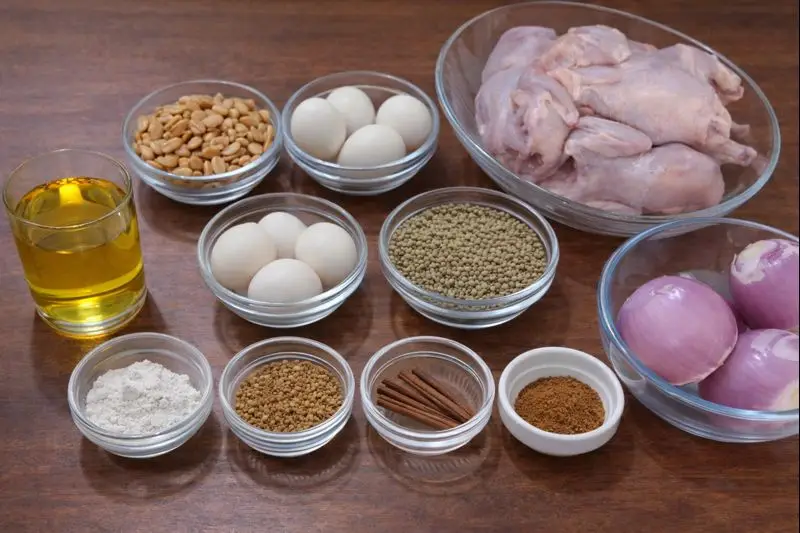
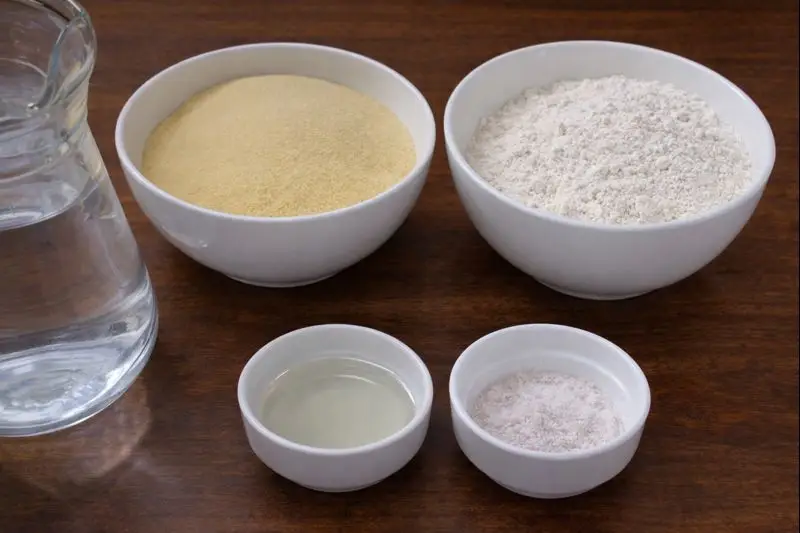
Before we touch the pot, we talk about ingredients. Because Rfissa is simple on paper… but every ingredient has a job. If one is weak, you feel it in the final bite. The broth won’t have that “deep” taste. The trid won’t carry the sauce. The whole dish becomes flat.
So here’s how I think about it—like someone who has seen Rfissa go right… and go wrong.
Chicken choices: coquelets vs thighs, and why slow simmer wins
In the video method we’re following, it’s coquelets—small chickens. Four of them.
That’s not random.
Coquelets give you a broth that tastes “whole.”
Skin, bones, joints… everything goes into the pot. That’s where the richness comes from.
But if you don’t have coquelets, people often use thighs and drumsticks.
Still good. Still traditional in many homes.
Just know this: you need enough bone and skin to build a broth with the body.
And the real secret isn’t the cut.
It’s the slow simmer.
Rfissa doesn’t like rushing.
You want the chicken to relax in that pot.
To give up its flavor slowly—so the broth turns golden, fragrant, and deep.
If you boil it hard, the chicken tightens. The broth turns sharp.
Slow heat… that’s the win.
The base: onions, garlic, smen, and cinnamon sticks
Now we talk about the smell of the kitchen.
Because this base… it announces the dish before anyone eats.
Onions. A lot of onions.
In our recipe, it’s about 600 grams. That tells you something.
Rfissa is not shy. The onions melt and become sweet in the broth.
Garlic. Eight cloves.
Some for the chicken, the rest for the sauce later.
Because garlic in Rfissa isn’t just “garlic.” It becomes part of the perfume.
Smen. One big spoon.
Smen is strong. It’s not butter. It’s deeper. Older.
If you’ve never used it, you’ll notice it right away.
But in Rfissa? It’s one of the things that makes people say: “Ah… this tastes Moroccan.”
Cinnamon sticks. Two of them, sitting in the pot like quiet guards.
Not sweet like dessert.
Just warm, round, and comforting in the background.
This base is why the broth feels like it has history.
Spices & aromatics: saffron, ginger, turmeric, pepper, ras el hanout
Rfissa spices are not a long list… but they’re serious.
Saffron is the crown here.
Real saffron, soaked in water.
You don’t throw it dry like powder. You let it open up in warm water first.
That golden color? That smell? That’s the moment the dish changes.
Ginger gives warmth. Not spicy like chili—warm like a blanket.
In our method, ginger shows up in the marinade and later in the sauce.
That’s how you build layers.
Turmeric gives color, yes.
But also that earthy backbone that keeps the broth from feeling “light.”
Black pepper—just a pinch, but it wakes everything up.
You don’t want a peppery broth. You want a broth that feels alive.
And ras el hanout… some families use it, some don’t.
My grandmother method focuses more on saffron, ginger, turmeric, and pepper—clean and classic.
If you use ras el hanout, keep it gentle.
Rfissa has its own personality. Don’t drown it.
Lentils + halba: texture, soaking, and bitterness control
Now the part that makes Rfissa feel like a real meal: lentils.
You want lentils that cook soft… but don’t disappear.
They should hold shape just enough, so every spoonful of sauce has texture.
And then there’s halba—fenugreek.
Optional in some recipes, essential in others.
In many Moroccan homes, halba is what makes it “real Rfissa.”
But halba has a strong side.
If you treat it carelessly, it turns bitter and takes over.
So here’s the rule:
If you use halba, soak it first. Give it time.
Let the harshness calm down.
And don’t throw a mountain of it.
Rfissa is about balance.
The onions bring sweetness. The saffron brings perfume. The smen brings depth.
Halba should sit inside all that—not shout over it.
When lentils are tender and halba is controlled, the sauce becomes thick and comforting.
Not watery. Not heavy.
Just… right.
Step-by-Step Rfissa Recipe (Traditional Method)
Alright. Now we cook. But I want you to hear this first—Rfissa is not hard. It’s just… patient. You don’t need fancy tools. You need a steady hand, a calm fire, and eyes that pay attention. Because this dish talks back. The dough tells you when it’s ready. The broth tells you when it’s rich. You just have to listen.
Saffron marinade: flavoring the chicken from the inside out
Start with the saffron water.
That’s your first gold.
In a bowl, pour about 1/2 of the saffron-infused water.
Add your marinade spices:
- ginger
- turmeric
- a pinch of black pepper
- salt
Mix it well. Not rushed. Let it turn into one color.
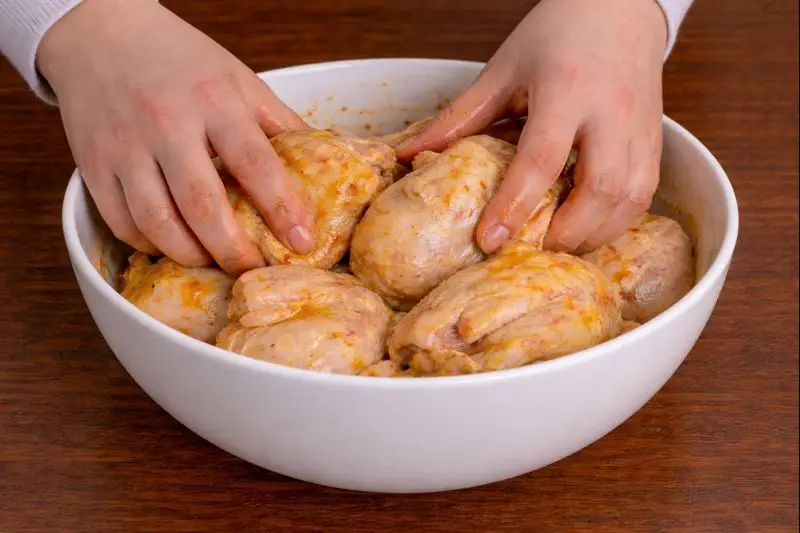
Now take your chicken—coquelets in this method, and rub that marinade everywhere.
Outside, inside, under the skin if you can. Every corner.
This is not just “seasoning.”
This is how the flavor gets into the meat before the pot even starts.
Then you wait.
At least 1 hour. A little more is even better.
If the chicken smells good before it hits the pot, you’re already on the right road.
Simmered chicken sauce: building a deep Moroccan broth
Get your big pot. Heavy if you have it.
Put in:
- one grated onion (from your total onions)
- one big spoon of smen
Then lay in the chickens.
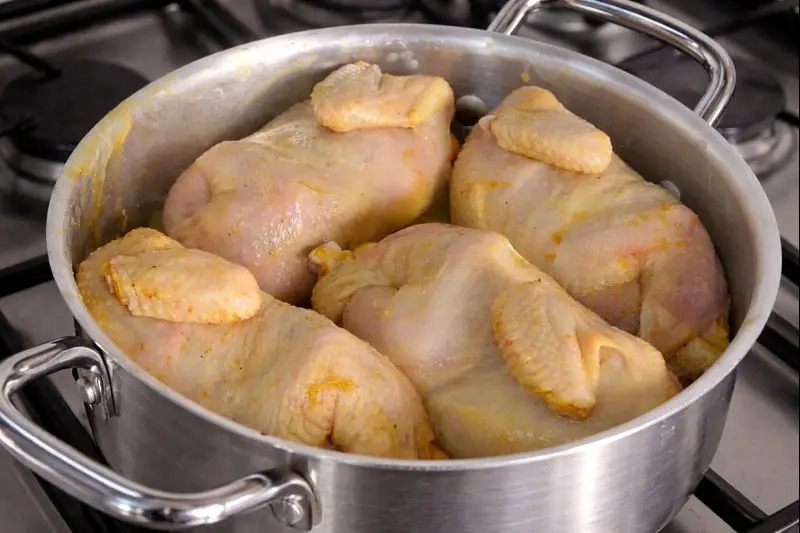
Pour in whatever marinade is left in the bowl. Don’t waste it.
Add two cinnamon sticks—right in the middle, like a little bridge.
Add 3 to 4 grated garlic cloves.
Now cover the pot halfway and let it cook 3 to 5 minutes.
You’re not trying to “boil.”
You’re waking everything up.
Turn the chicken.
Pour the rest of the saffron water down the sides.
Add 1/4 a glass of olive oil.
Cover partially again, 5 to 7 minutes.
Then add a big glass of water, enough to cover the chicken.
Cover fully and let it cook on medium heat until the chicken is tender, (about 40 to 50 minutes).
This is where the broth is born.
The onions melt. The garlic disappears into the sauce. The saffron colors everything.
And the kitchen starts to smell like a real Moroccan day.
Making trid dough: semolina + flour, resting, and hand-feel cues
While the chicken cooks, you start the trid.
In a big bowl or a wide platter, mix:
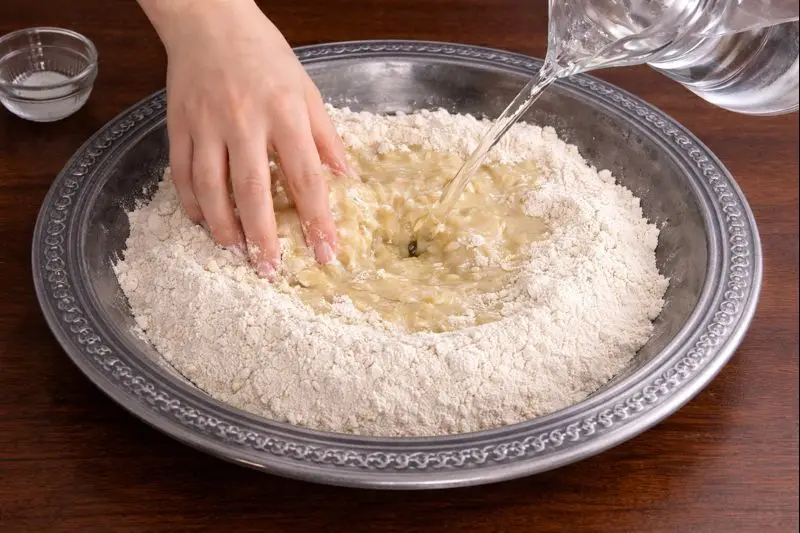
- fine semolina
- white flour
- salt
- vegetable oil
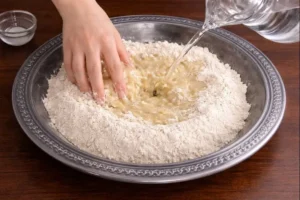
Then add water slowly.
Little by little. Don’t drown it.
You’re looking for a dough that’s soft, not sticky, and not stiff.
You press it with your fingers.
If it pushes back gently, it’s good.
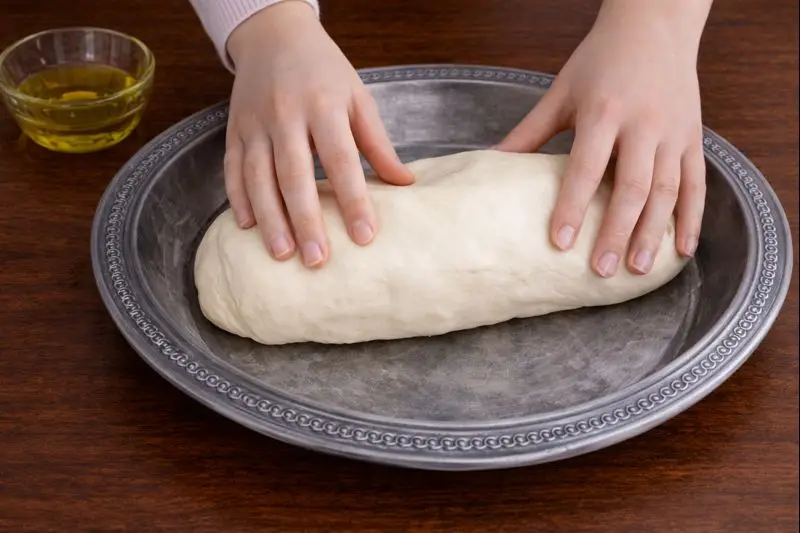
Now knead it. Strong.
No yeast here. No waiting for rising.
Just kneading until it becomes smooth.
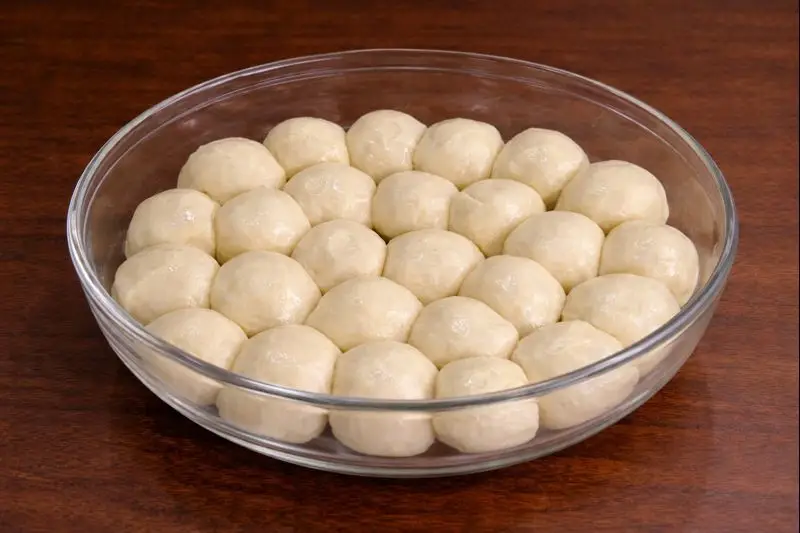
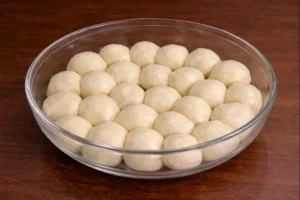
Then you form small balls.
Hands oiled well.
Light oil on the balls, too.
Cover them. Let them rest 1 to 1½ hours.
That rest is not optional.
That rest is what makes the dough stretch thin without fighting you.
Cooking trid sheets: thin, soft, never browned
Oil your work surface.
Take one ball.
Stretch it very thin.
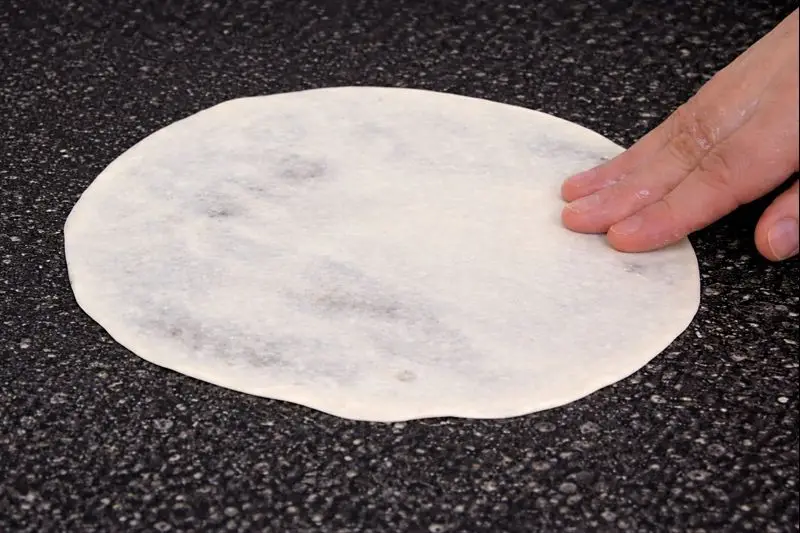
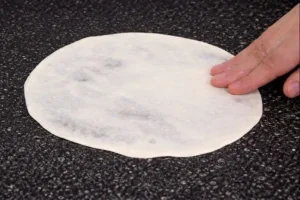
So thin you almost see the countertop through it.
Don’t worry if it’s not perfect circles.
Trid isn’t about beauty. It’s about thinness.
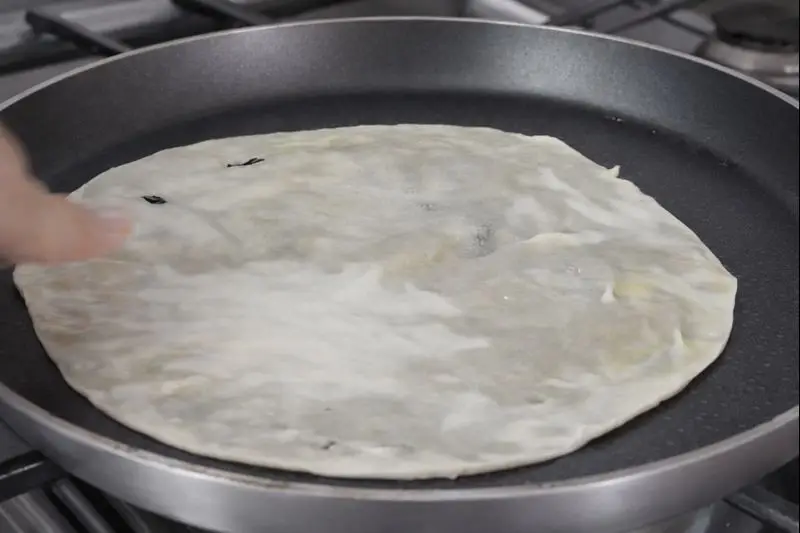
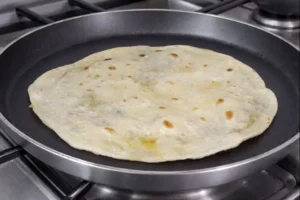
Cook each sheet in a lightly oiled pan.
Quick cooking. Gentle.
You don’t want it crispy.
You don’t want color.
Just set, soft, and flexible.
Because later, this trid has to drink the broth.
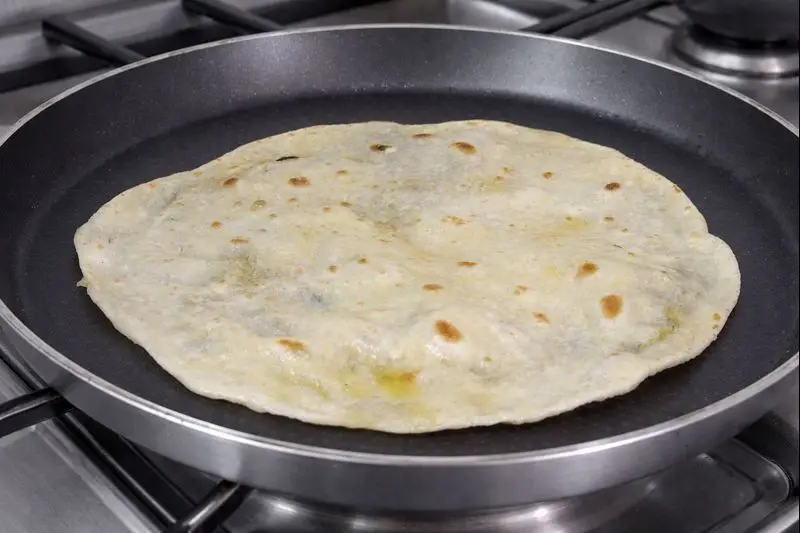
If you brown it, it becomes stiff.
And Rfissa needs softness, not crunch.
Stack the sheets. Keep going.
And when you finish, you’ll look at that pile, and you’ll feel it—
This is real trid. This is the base of the whole dish.
Assembly, Steaming, and the Final Moroccan Finish
This is the part people skip when they try to “simplify” Rfissa. And that’s where they lose the soul of it. Because Rfissa isn’t only chicken and lentils, it’s the trid, steamed and soft, then dressed with broth like it’s fabric. This is where everything comes together… and you can’t fake it.
Lentil sauce: finishing with the chicken cooking liquid
When the chicken is cooked and tender, take it out gently.
Put it aside. Let it rest.
Now you build the lentil sauce.
In a separate pot, add what’s left of your olive oil.
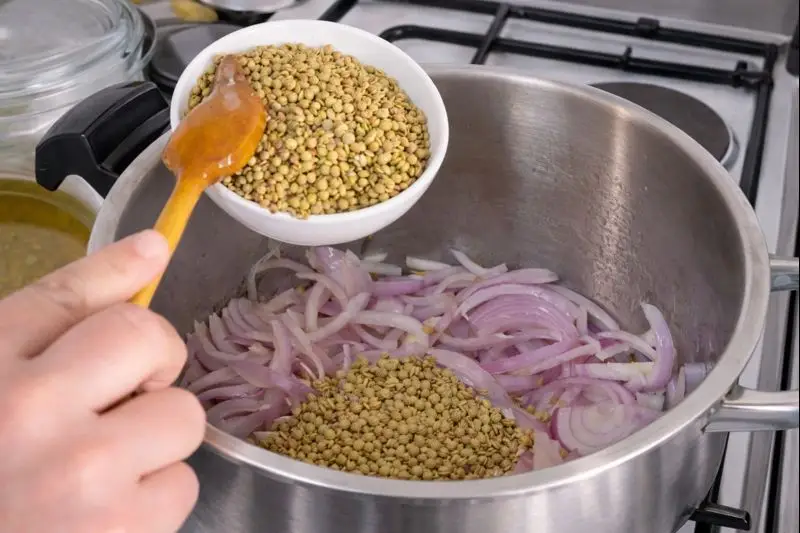
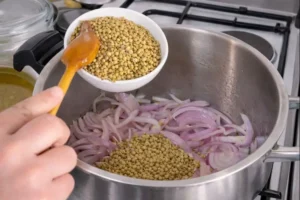
Add the remaining onions—sliced or chopped the way you like, but give them time.
A little salt.
Let them soften for about 5 minutes.
Then add your lentils. Stir them in.
Add about ½ a glass of water—just enough to start them.
Now the spices go in:
- fenugreek (halba), if you’re using it
- turmeric
- black pepper
- ginger
Cover and let it cook for 5 minutes.
Then comes the magic move:
Pour in the chicken cooking liquid—that broth you built slowly with saffron, garlic, onions, smen, and cinnamon.
That broth is not “extra.”
That broth is the whole point.
Cover again and let the lentils cook 30 minutes or more, until they’re fully tender and the sauce feels thick, warm, and rich.
If it looks too dry, add a little water.
If it looks too watery, give it time.
The onions and lentils will tighten it naturally.
Cutting trid and steaming: the couscoussier technique
Now take your trid sheets.
Please don’t cut them like paper.
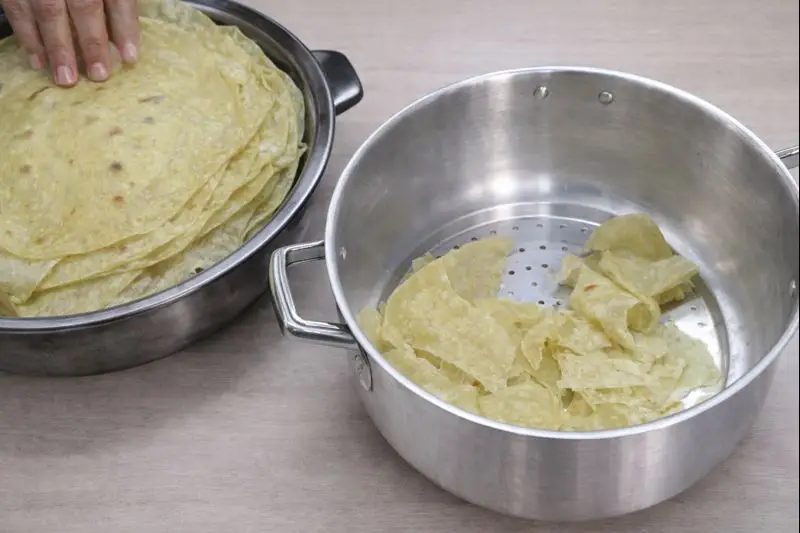
Tear them by hand, or use scissors—whatever feels easier.
Small pieces. Not dust. Not big blankets.
Just bite-sized so that the steam can reach everything.
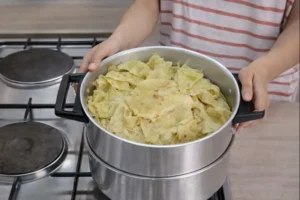
Please put them at the top of the couscoussier.
No sauce yet. No broth.
Just steam.
Steam for 15 to 20 minutes.
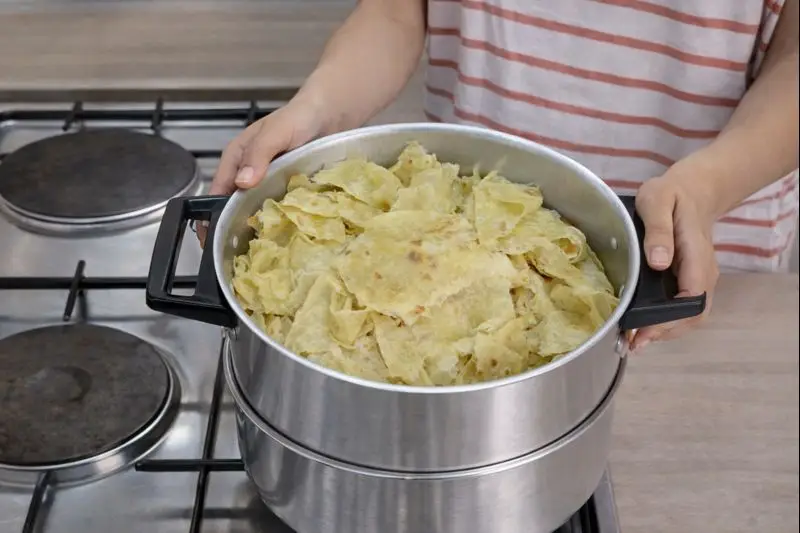
And when you lift the lid…
That steam hits your face, and you’ll smell the trid waking up again.
Soft. Light. Ready to hold the broth without turning into paste.
Steaming is what makes trid “drink” without drowning.
Layering like a Moroccan: broth first, then lentils, then chicken
This is the Moroccan way.
Not plated like a restaurant.
Built like a family dish.
Start with the trid in a big serving plate.
Spread it out.
Now ladle broth—slowly.
Not all at once.
You want it soaked, but not swimming.
Then you spoon the lentil sauce over the top.
Let it fall into the trid. Let it settle.
Now place the chicken right in the center.
That’s the crown.
If you have extra broth, pour it around the edges, so people can add more as they eat.
Rfissa should stay hot. It should stay moist.
It should feel generous.
Oven browning: butter brush, golden skin, and serving heat
Before you serve, you give the chicken its last gift: color.
Brush each chicken with butter.
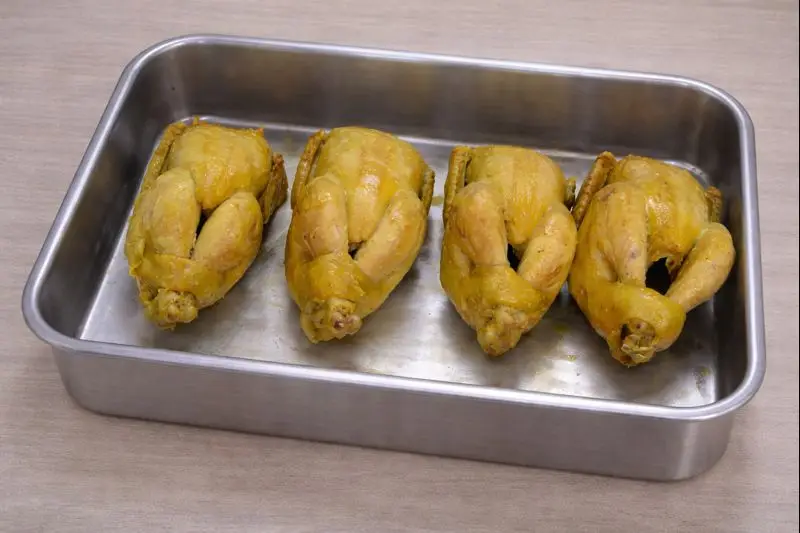
Not a heavy coat—just enough to shine.
Please put it in the oven until it turns golden.
You’ll see the skin tighten.
You’ll smell that rich roasted note mixing with saffron and smen.
And then… You serve immediately.
Rfissa doesn’t like waiting.
It’s best when it’s steaming, when the trid is soft, and the broth is still alive.
You bring it to the table.
You call people.
And you don’t overthink it.
Just eat. Together.
🎥 Watch: Rfissa in Motion — The Moroccan Experience in 1 Minute
Tips & Variations to Make Rfissa Perfect Every Time
Rfissa looks simple when it’s on the table. But getting it right… That’s where the cook shows. The good news? Most mistakes are small. A little too much broth. A little too much heat. Halba was not treated with respect. Fix those, and your Rfissa goes from “nice” to “wow, this tastes like Morocco.”
Common mistakes: soggy trid, bland broth, undercooked lentils
1) Soggy trid
This one hurts because it ruins the whole feel.
It happens when you pour the broth like you’re filling a bowl. Too fast. Too much.
Trid needs to drink slowly.
Do this instead:
- steam the trid first (always)
- Add broth in rounds, one ladle at a time
- Pause 30 seconds, let it settle, then add more
If you overshoot?
Don’t panic. Spread it out a little. Give it a minute.
Sometimes the trid recovers. Sometimes… you learn for next time.
2) Bland broth
Rfissa lives in the broth.
If the broth is weak, everything is weak.
The broth becomes bland when:
- The onions didn’t cook long enough
- The pot was rushed at high heat
- You didn’t season in layers (marinade + pot + lentil sauce)
Taste the broth before you assemble.
If it doesn’t make you close your eyes for a second… fix it.
A pinch of salt. A touch more ginger. Sometimes a little more saffron water.
3) Undercooked lentils
Lentils should be tender, not crunchy.
But also not much.
Rinse them. Give them time.
And don’t forget—if you add them when the broth is boiling hard, they can split and turn cloudy.
Medium heat. Covered. Patient.
If they’re still firm, give them 10 more minutes. Rfissa is not a race.
Regional variations: trid vs msemen, chicken vs pigeon
Morocco is one country… but the kitchens change from city to city.
Trid vs msemen:
Trid is the classic base. Thin sheets. Soft. Steamed.
But many families use msemen—especially when trid is too much work on that day.
Msemen gives more chew. More “bread” feeling.
Trid gives silk. It melts with the broth.
If you use msemen, cut it small, let it dry a little, and treat it gently with broth.
Same rule: don’t drown it.
Chicken vs pigeon:
Most homes use chicken. It’s familiar. It feeds everyone.
But in some regions, for special occasions, you’ll find pigeon Rfissa.
Stronger flavor. More delicate. Feels very festive.
Same soul, different bird.
The method stays: rich broth, lentils, steam-soft base, and that warm Moroccan finish.
Make-ahead & storage: keep trid separate, reheat broth gently
Rfissa can be made ahead… but only if you respect the parts.
Here’s the smart way:
- Cook the chicken and broth
- Cook the lentil sauce
- Make the trid sheets
- Store trid separate from the broth and lentils
Because once trid sits in broth overnight, it doesn’t “soak.”
It collapses.
To reheat:
- Warm the broth and lentils slowly, on medium-low heat
- Add a splash of water if needed (broth tightens in the fridge)
- Steam the trid again for a few minutes to soften it
- assemble fresh when you’re ready to eat
That’s it. Gentle heat. No boiling like crazy.
Rfissa needs calm even the second day.
FAQ: Rfissa Questions
People ask the same things about Rfissa again and again. And I get it. It’s not like a regular stew. It has trid. It has that deep broth. Sometimes it has halba. So let me answer the questions the way I’d answer them in my own kitchen—simple, honest, and practical.
What does Rfissa taste like?
Rfissa has a rich, savory flavor with warm spices, soft trid, and a comforting broth.
Rfissa tastes warm. That’s the first word.
It’s savory and rich, but not heavy like cream.
The broth is deep from onions, garlic, and slow cooking.
Saffron gives a soft perfume—almost floral, but not sweet.
Ginger brings that gentle heat to the back of the throat.
And the trid… that’s the texture.
Soft, silky, soaked with broth.
It makes the whole dish feel like comfort food, Moroccan-style.
If you add halba, you get a small, bitter-nutty note.
Not bad. Just “grown-up.”
That’s what makes it taste like a dish made for special days.
Is fenugreek (halba) necessary for authentic Rfissa?
Fenugreek (halba) is traditional in Rfissa, but it is optional depending on taste.
In many Moroccan homes—yes.
Halba is part of the identity of Rfissa.
But Morocco is wide. Families cook differently.
Some make Rfissa without it, especially if someone in the house doesn’t like the smell or the taste.
Here’s my honest answer:
If you want the most traditional flavor, use halba.
If you’re new to it, start small, or keep it optional.
Rfissa can still be delicious without halba.
But with halba—when it’s done right—it feels more “real.”
How do you reduce the bitterness of halba in Rfissa?
Bitterness usually comes from two things: too much halba, or halba that wasn’t treated gently.
Do this:
Soak the halba first (give it time in water)
Use a small amount (don’t turn it into the main flavor)
Make sure your broth is strong—onions, saffron, smen, garlic—so the halba sits inside the flavor, not on top of it
And one more thing people forget:
Halba needs cooking time.
When it cooks slowly with the lentils and broth, it becomes smoother. Less sharp.
Halba is like strong tea.
If you overdo it, it takes over. If you respect it, it gives depth.
Can I make Rfissa without trid or msemen?
Rfissa can be made without trid, but it will not have its traditional texture and identity.
You can… but it won’t feel like Rfissa the same way.
Trid (or msemen) is not just “bread.”
It’s the base that drinks the broth. That’s the whole point of the dish.
If you can’t make trid, msemen is the closest substitute.
If you can’t find either, you can still do something comforting with the same broth and lentils, but call it what it is: a Moroccan chicken and lentil dish.
But without trid or msemen, you lose what makes it a typical Moroccan meal — the base that turns broth into something shared, soaked, and traditional.
If you want the closest “Rfissa feeling,” try:
store-bought msemen (if you can find it)
thin flatbread cut small and steamed briefly before adding broth
The steaming part matters.
It helps the bread absorb without collapsing.
Can I prepare Rfissa in advance and reheat it the next day?
Rfissa can be prepared in advance, and the broth often tastes better the next day.
Yes. And honestly, the broth can taste even better the next day.
But you have to store it the smart way:
Keep the broth + lentils together
Keep the trid separate
Keep the chicken separate if you want it to stay nice and firm
To reheat:
Warm the broth gently (medium-low)
Add a splash of water if it thickens in the fridge
Steam the trid for a few minutes to soften it again
assemble fresh when you’re ready to serve
Rfissa doesn’t like aggressive reheating.
No hard boiling. No rushing.
Warm it slowly, and it will treat you well.
Bring Rfissa to Your Table Tonight
If you’ve made it this far, you already understand something important:
Rfissa isn’t a quick recipe. It’s a feeling. A warm table. A pot that whispers on the stove.
And when you serve it, you don’t just serve food —
You serve a moment.
Cook it slow. Share it loud
Don’t rush Rfissa.
Let the onions melt. Let the broth deepen.
Let the trid steam and soften the way it’s meant to.
And when it’s ready… bring it to the table while it’s still breathing.
Steam rising. Saffron in the air.
Put it in the center — Moroccan style.
Because like every typical Moroccan meal, it’s not just about food — it’s about people around a dish that brings warmth and memory.
Then call people.
Family, friends, neighbors… whoever is near.
Because Rfissa tastes better when it’s shared.
When hands reach from every side.
When someone says, “Just a little more sauce,”
And without thinking, you pour.
Tried it? Let me know
If you cook this Rfissa, come back and tell me how it went.
Leave a comment — tell me what was easy, or what made you hesitate.
Rate the recipe — so others know it’s worth their time.
Ask a question — if your trid tore, if your broth felt too light,
if halba was too strong for you.
I’ll answer like we’re standing in the same kitchen.
Keep cooking the real way
If this dish touched something in you,
maybe you’ll want to try one of these next:
- A chicken tagine, sweet and savory, perfect for guests
- A humble lentil stew — quick, but full of comfort
- A msemen or Moroccan bread recipe — because once your hands learn the dough, they never forget
One dish leads to another.
That’s how Moroccan kitchens work.
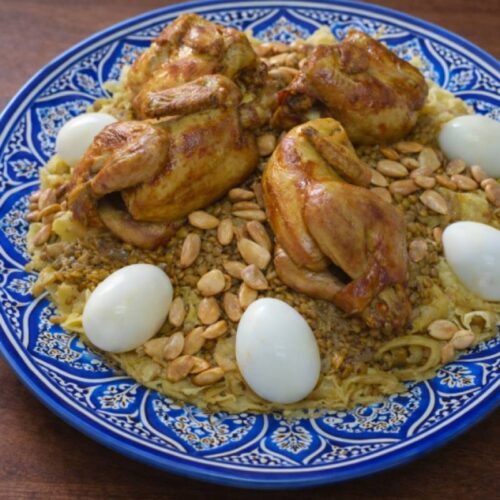
The Ultimate Typical Moroccan Meal? Rfissa with Saffron and Love

Equipment
- Large pot or Dutch oven (for chicken and broth)
- couscoussier (for steaming the trid)
- Non-stick flat pan or griddle (for cooking trid sheets)
- Large mixing bowls (for dough and marinade)
- Rolling pin (for flattening dough)
- Sharp kitchen scissors or clean hands (for cutting trid)
- roasting pan (for browning the chicken)
- Slotted spoon or tongs (for handling chicken)
- Fine mesh sieve or skimmer (optional, for broth clarity)
- Wooden spoon (for stirring lentils and onions)
- Large Moroccan serving dish or gassaa (for final assembly)
Ingredients
🐔 For the Chicken & Broth:
- 4 small chickens coquelets or 6–8 chicken thighs with skin and bone
- 200 g onions about 1 medium, grated or finely chopped
- 4 garlic cloves minced
- 1 tablespoon smen Moroccan preserved butter
- 2 cinnamon sticks
- 1 teaspoon ground ginger
- 1 teaspoon turmeric
- 1/2 teaspoon of black pepper
- 2 generous pinches of saffron threads infused in 1 cup warm water
- 1/4 cup olive oil
- Salt to taste
🌿 For the Lentil Sauce:
- Remaining onions from the total 600g
- 1 cup green or brown lentils soaked and rinsed
- 1 –2 tablespoon fenugreek seeds halba, soaked beforehand
- ½ teaspoon turmeric
- ½ teaspoon ginger
- Salt and pepper to taste
- Remaining chicken broth from previous step
🍞 For the Trid Dough:
- 2 cups fine semolina
- 1 cup white flour
- 1 teaspoon salt
- 2 tablespoons vegetable oil
- About 1 cup water added gradually
- Extra oil for kneading and resting
🍽️ Final Garnish (Optional):
- 6 hard-boiled eggs
- ½ cup toasted almonds
Instructions
🔸 Step 1: Prepare the Saffron Marinade
- In a bowl, mix saffron water (½ cup), ground ginger (½ tsp), turmeric (½ tsp), pepper, and salt.
- Rub this marinade thoroughly over and inside the chicken.

- Let marinate for at least 1 hour.

🔸 Step 2: Cook the Chicken
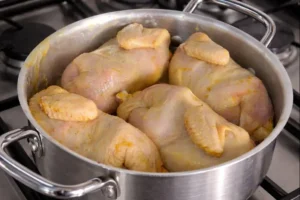
- In a large pot, add one grated onion, one big spoon of smen, and the marinated chicken.
- Add 2 cinnamons sticks and 4 minced garlic.
- Cook covered for 5–7 minutes to let flavors release.
- Add saffron water, olive oil, and enough water to cover the chicken.
- Simmer gently for 40–50 minutes, until tender.
- Remove the chicken and reserve the broth.
🔸 Step 3: Prepare the Trid Dough
- Mix semolina, flour, salt, and oil.
- Slowly add water while kneading until dough is smooth and soft.
- Form small balls, coat lightly with oil, and let rest for 1 to 1½ hours.
🔸 Step 4: Cook Trid Sheets
- Roll out each ball into a thin sheet (nearly transparent).
- Cook on a hot pan without browning, just until soft and set.
🔸 Step 5: Cook the Lentil Sauce
- In another pot, sauté remaining onions (4 mediums chopped ) in olive oil.
- Add soaked lentils and halba (2 tbsp optional), plus spices (½ tsp tumeric, ½ tsp ginger, ½ pepper)
- Add the reserved chicken broth and simmer for 30–40 minutes, until lentils are tender and sauce is thick.
🔸 Step 6: Steam the Trid
- Place torn trid into the top of a couscoussier (steamer).
- Steam for 15–20 minutes to refresh and soften the bread.
🔸 Step 7: Assemble the Rfissa
- In a large serving dish, layer the trid.
- Gradually ladle lentil sauce over the trid, allowing it to soak in.
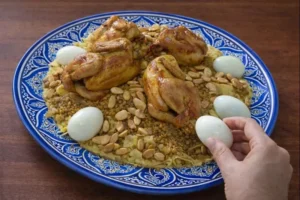
- Place chicken in the center, then garnish with hard-boiled eggs and toasted almonds if using.
- Optionally, brush chicken with butter and brown in the oven before placing on top.
Notes
Nutrition Information (Per Serving)
| Nutrient | Amount per Serving |
|---|---|
| Calories | 620 kcal |
| Protein | 35g |
| Carbohydrates | 45g |
| Fats | 35g |
| Saturated Fats | 8g |
| Fiber | 7g |
| Sugars | 6g |
| Sodium | 550mg |
| Cholesterol | 120 mg |
🛈 Important Note:
These values are approximate and may vary depending on the type of chicken used, the amount of trid, the quantity of oil or smen, and individual cooking methods. For precise dietary tracking, consider using a nutrition calculator based on your exact ingredients and portion sizes.
✉️ Stay in the Kitchen With Me
Every dish has a story — and if you’ve made it this far, you probably love the kind that fills a home with warmth, steam, and the smell of saffron.
If Rfissa reminded you of something deeper than just food…
If you believe meals should be slow, shared, and full of meaning…
You’re in the right place.
👉 I send out stories, tips, and real Moroccan recipes — the kind we don’t rush, and the kind you won’t find on every food blog.
Sometimes it’s a family memory.
Sometimes it’s a spice trick.
Sometimes it’s just something you’ll want to cook this weekend.
Enter your email below and I’ll make sure it all lands softly in your inbox — nothing spammy, nothing boring, just more of this Moroccan soul on a plate.
And if you ever need help, don’t hesitate to reach out — I’ll be happy to assist you, and it brings me real joy to do so.
Let’s keep cooking, together.
📩 Get My Next Moroccan Recipe
Family recipes, tagine tips, and stories from Morocco, sent directly to your inbox.
📲 Let’s Stay Connected
Cooking is better when it’s shared — and I’d love to keep the conversation going with you beyond this recipe.
I share behind-the-scenes photos, step-by-step videos, and little slices of Moroccan life on social media.
Some days it’s a bubbling pot of saffron broth.
Other days, it’s just a memory from my grandmother’s kitchen.
Follow along, say hi, ask questions, or just watch the stories unfold — you’re always welcome.
→ Find me on Instagram, Pinterest, and Facebook
→ Save, share, and cook with others who love typical Moroccan meals just like you do.
Click below and step into the kitchen with me — wherever you are in the world.
💬 Did You Try This Recipe? Let’s Talk!
Rfissa isn’t just a dish — it’s a moment. A memory. A meal that brings people together.
If you cooked it, tasted it, or even just thought about making it…
I’d love to hear from you!
- 💬 Did your trid turn out soft?
- 🧂 Was your broth rich enough?
- 🟠 Was the fenugreek too strong or just right?
Leave a comment below and tell me everything — the good, the messy, the questions in between.
I read every message, and it means a lot to connect with cooks like you.
Don’t be shy. Your kitchen story might help someone else, too.