Table of Contents
Beef and green beans: Where Time Tastes Better Than Speed
They call it stir-fry. Quick. Loud. Everything is jumping in the pan.
But where I come from… we let things slow down.
I used to drive a taxi in Rabat. Cold mornings, noise everywhere, engines coughing.
But inside the station? There was warmth. Steam. Smells of garlic. Of cumin. Of something deep.
Samira. She had this little place — not much.
Just a row of tagines outside. Each one is bubbling gently.
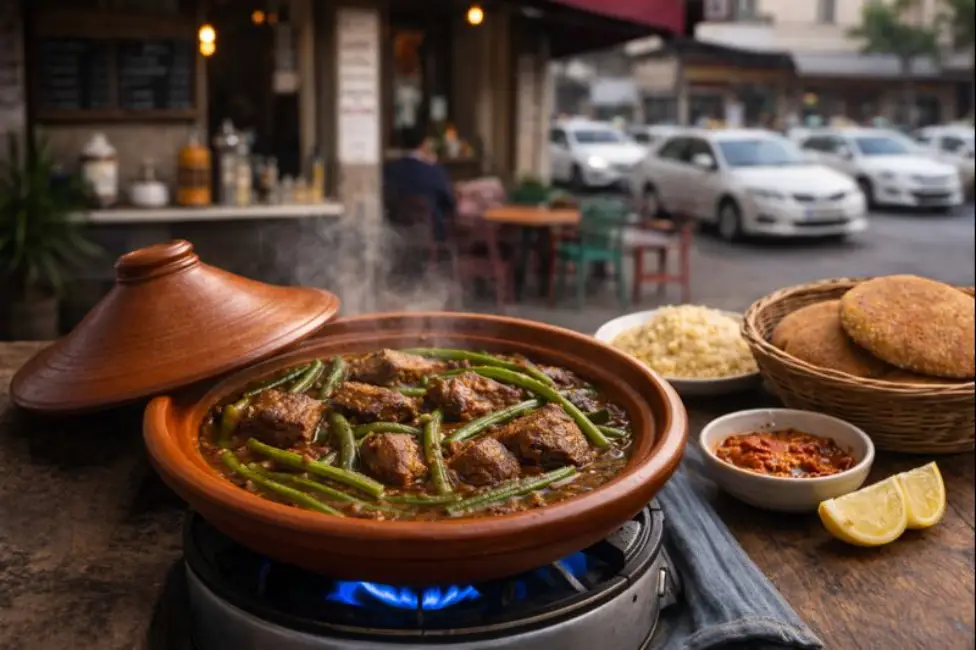
No shouting. Just the sound of cooking. Time passing. Things softening.
I always asked for the same.
Beef and green beans.
Not crunchy. Not dry.
But soaked. Tender. Full of sauce that clings to bread like honey.
This is not fast food.
This is food with a heartbeat.
“Let it cook slow, and it will feed more than just hunger,” Samira used to say.
And she was right.
It’s why I’m still making it this way. And now, I want to show you.
A Taste of Morocco: Not Your Average Beef and Green Beans
There’s more than one way to cook beef and green beans — but this way has roots. Deep ones.
Why This Dish Isn’t Just Another Stir-Fry
This… this is not a wok thing.
Not something you flip fast with soy and sugar.
No.
This is slow. Earthy.
You don’t hear the sizzle — you hear the breathing of the pot.
That low, gentle sound. Like its thinking.
The sauce doesn’t coat the meat.
It enters it.
It becomes one with it.
And the green beans?
Not bright and crunchy.
No. They surrender.
They become soft. Rich.
Soaked in spice and tomato.
You came here looking for beef and green beans, I know.
But what I’m giving you…
It’s another world.
Memories from the Taxi Station in Rabat
I still see the steam.
Windows fogged. Aprons damp. That smell wrapped around you like a blanket.
We sat there between rides. Elbows on old wooden tables.
Samira, always stirring something.
Her tagines lined up like soldiers. Beef, lamb, chicken… all bubbling, none rushed.
And mine?
Always the same.
Green beans, beef, and slow sauce.
You eat it with your hands, tear the bread, and scoop the bottom.
It sticks to your fingers.
The cumin, the paprika… You carry it with you the whole day.
The Magic of Slow Cooking in Moroccan Kitchens
We don’t use timers.
We listen.
We touch the meat with a wooden spoon. We know when it’s ready.
A good tagine… it doesn’t shout.
It hums.
You walk past the kitchen, and you know.
The smell hits the wall, turns the corner, and follows you.
We layer the flavors. Onion first. Then garlic. Then spice.
Then water. Hot. Not cold. Never cold.
And then we wait.
Sometimes two hours. Sometimes more.
If you’re in a hurry, eat something else,” my uncle used to say.
Comfort Food with Real Roots
This isn’t food for Instagram.
This is food for when your hands are tired.
For when the day has taken too much.
It’s not dressed up.
It’s not shiny.
It just… feels like home.
Like rain on the roof.
Like bread still warm from the oven.
Like your mother asking, “You hungry?” even when she already knows the answer.
Ingredients That Bring the Tagine to Life
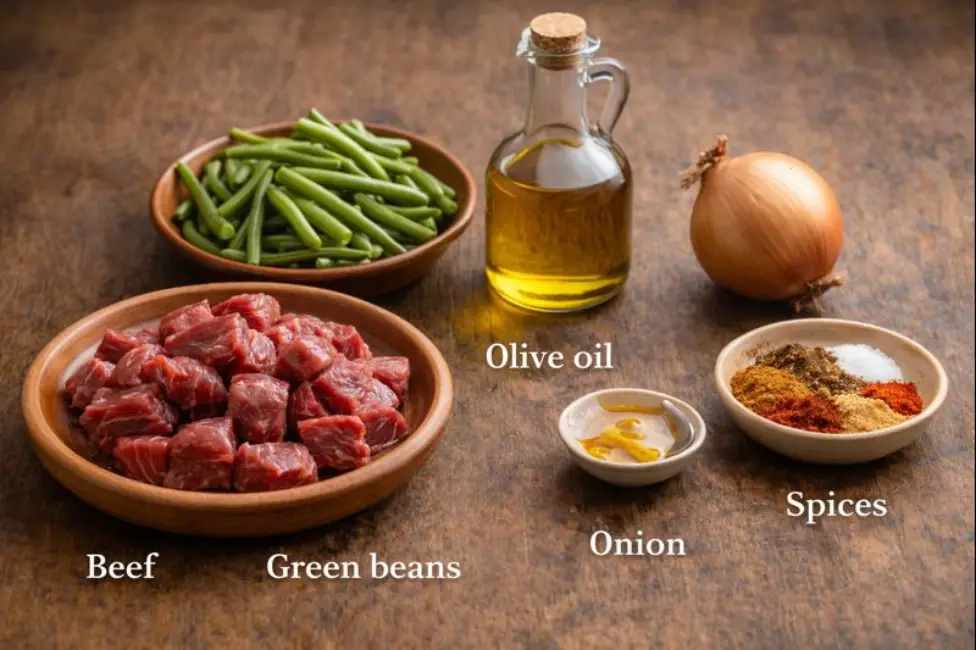
Before you cook, you gather. What you choose matters. What you touch, what you smell.
Choosing the Right Cut of Beef for Stewing
Don’t rush the meat.
That’s the first thing.
You need something with muscle.
Something that’s worked, not soft like filet.
Shoulder. Shank. Maybe neck.
A bit of fat, a bit of tendon — that’s what gives body to the sauce.
It takes time to melt.
But when it does… ah. It falls apart between your fingers.
You don’t even need a knife.
I touch it raw, and I can already tell —
Will it hold? Will it release?
That’s the part no recipe tells you.
You want beef that’s ready for the journey.
Not something delicate.
This is beef and green beans in a tagine, not in a frying pan.
Seasonal Vegetables: Green Beans and Beyond
Spring is for green beans.
Slim, snappy, green like fresh mint.
But once they cook down in the sauce… they change.
They go soft. They drink the spices.
Other times, I use peas, potatoes, or even zucchini.
Sometimes all together.
It depends on what the market has.
It depends on what your neighbor gives you.
But green beans — they hold a special place.
They stretch. They feed many.
And when they soak in tomato and cumin… they remind me of home.
Essential Moroccan Spices and What They Do
We don’t use dozens.
Just the right ones.
- ✔️ Ginger – it wakes the meat up
- ✔️ Turmeric – for earth, and that golden warmth
- ✔️ Paprika – not hot, just color and comfort
- ✔️ Black pepper – always, always freshly ground
- ✔️ Salt – enough to bring it all forward
- ✔️ Garlic – crushed, not chopped. More perfume, less bitterness
And don’t forget the olive oil.
Not too much.
Just enough to carry the flavor to every corner of the pot.
“Spices don’t shout in Morocco,” my aunt once told me.
“They whisper — but if you listen, you feel them.”
Step-by-Step: How to Make Moroccan Beef and Green Beans
Now let me walk you through it. Not like a chef. Like someone at your side, in the kitchen.
Searing the Beef for Maximum Flavor
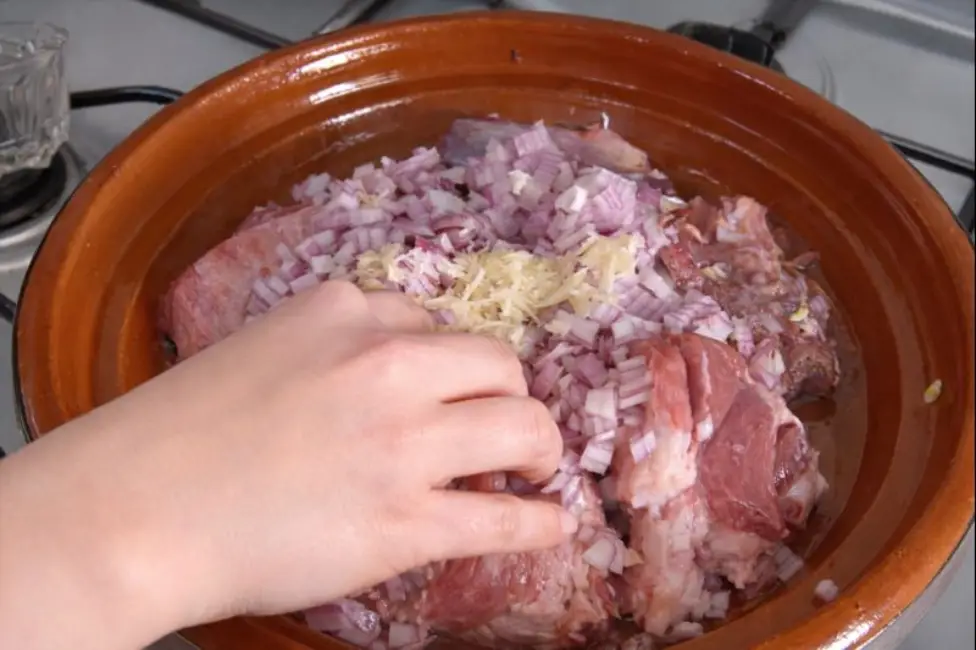
Start with heat.
Medium, not too strong.
You don’t want to burn. You want to wake the meat up.
A mix of olive oil and neutral oil — I pour by feel.
When it shimmers, I add the beef. No onions. Not yet.
It has to sizzle. Not scream — just sizzle.
Let it color. Let the sides catch a bit.
You turn it when it tells you. Not before.
It smells like something is beginning.
Like the pot is talking to you.
That’s the moment you know:
This beef and green beans stew won’t be quiet.
It will speak, gently, from the first bite.
Building the Sauce: Tomato, Spices, and Time
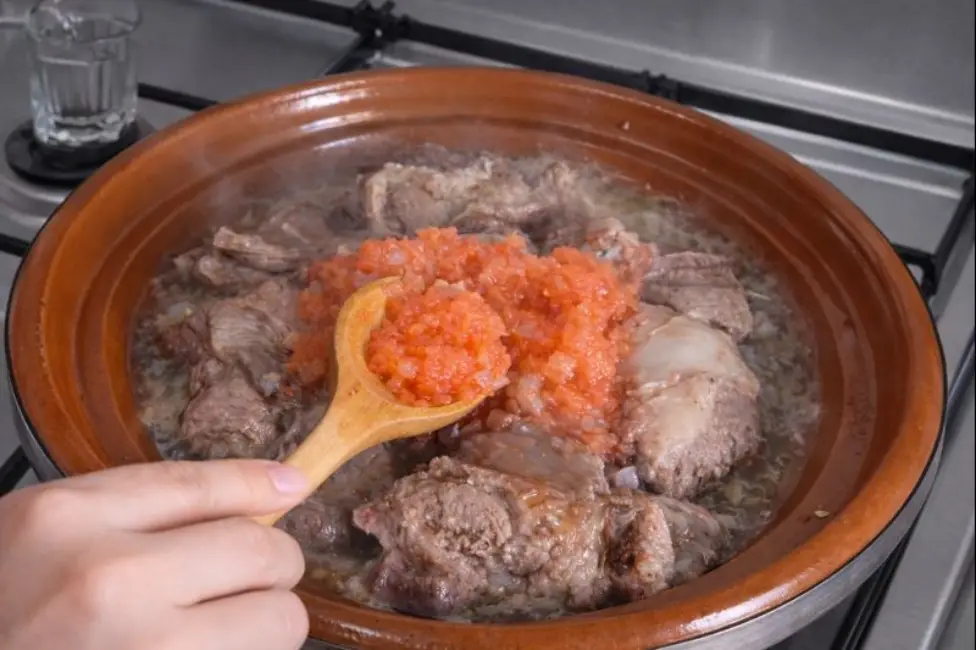
Now the onions.
Chopped, not too fine.
Let them soften next to the meat — not under it. Beside it.
Add salt now.
It draws out their water, making them melt faster.
Wait until they go translucent.
Then… garlic. Then spices.
Turmeric. Ginger. Paprika. Black pepper.
Let them hit the heat. Just seconds. Just enough.
You’ll smell it.
Not sharp. Not harsh. Just warm.
Like the sun on stone.
Then comes the grated tomato. Not canned if you can avoid it.
It softens everything. Adds body. Acidity. Sweetness too.
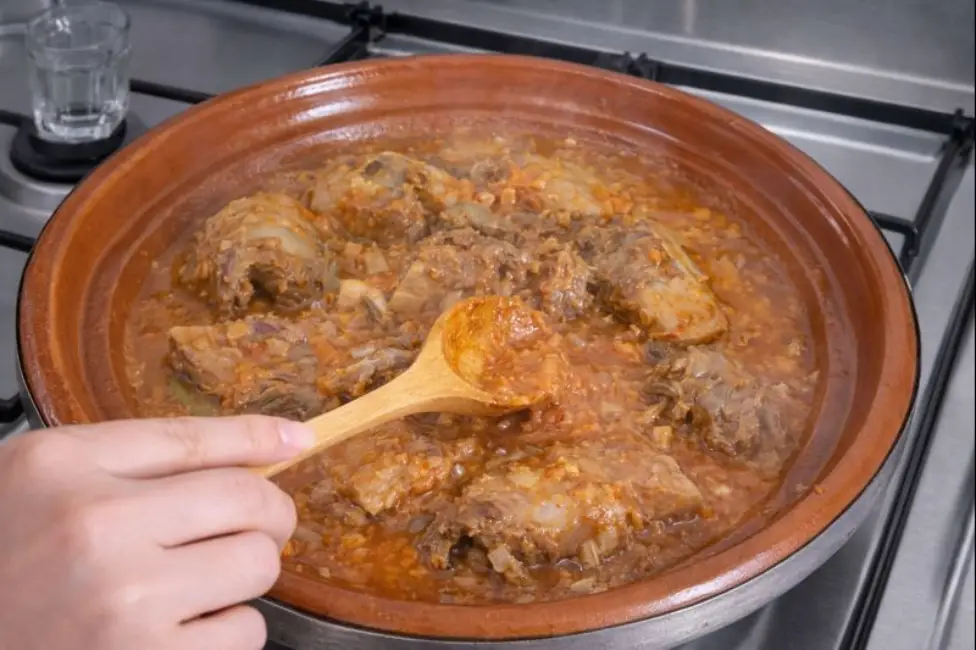
Last — hot water. Slowly. Let it cover halfway. Not flood.
Now… you wait.
Cover. Low heat.
Time starts now.
How to Prepare Fresh Green Beans (Before Cooking)
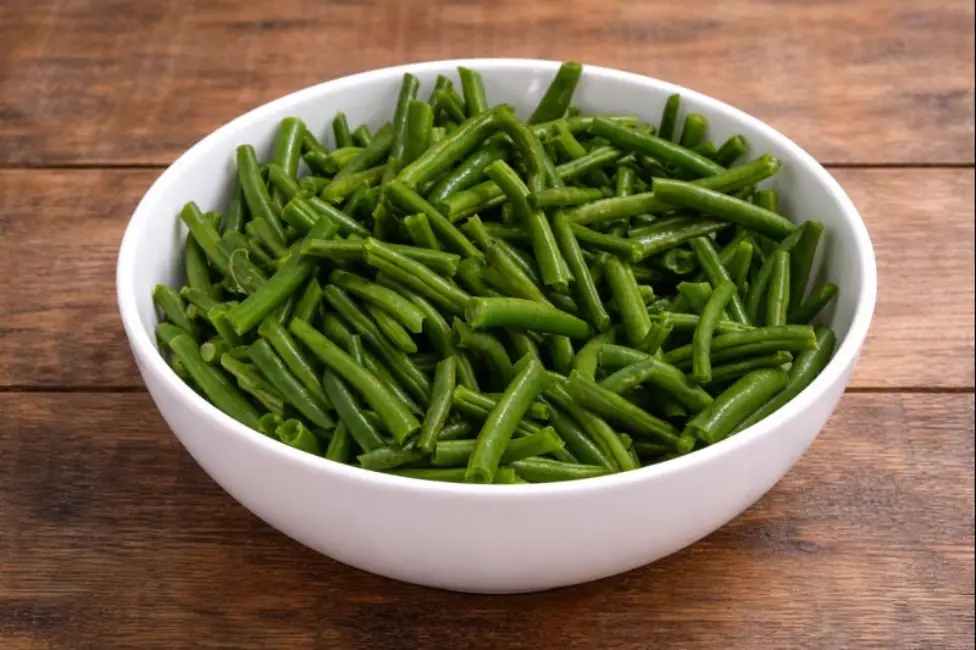
You don’t throw green beans into a dish just like that.
First — rinse them well. Cold water. Let the dust go.
Then… you pinch both ends. Snap. Snap.
It’s a rhythm. Once your hands know it, they move without thinking.
Some beans have strings. Tough ones.
You pull gently — they come off like old thread from a seam.
Sometimes I leave them long.
Sometimes I cut them in half — depends if the kids are eating.
That’s it. Nothing fancy.
But these steps? They change how the bean feels in your mouth.
The Green Bean Secret: Pre-Cooked to Stay Bright
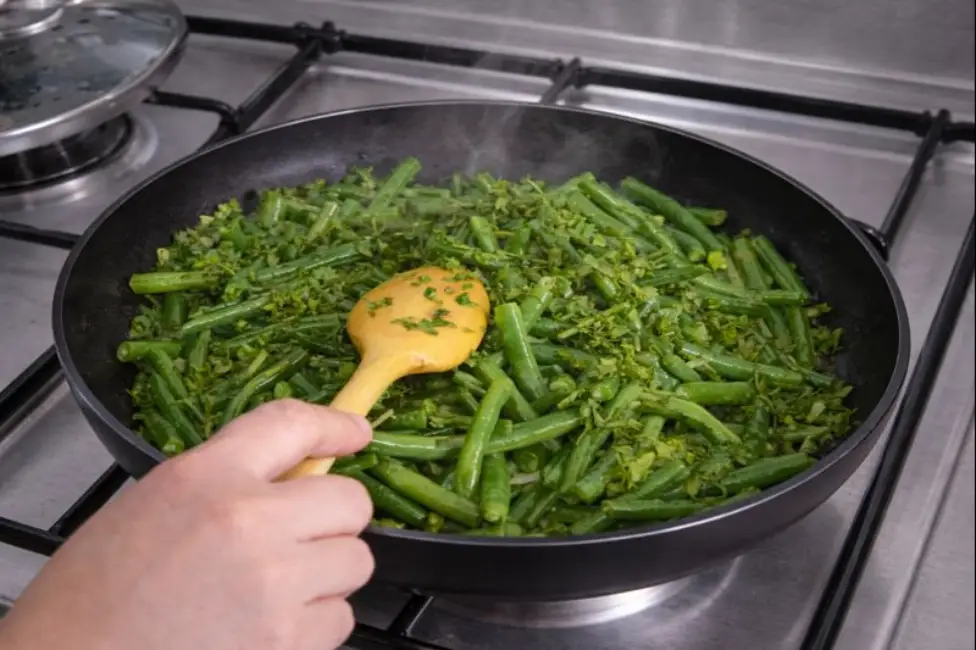
Here’s the trick most don’t know.
Don’t throw the beans in raw.
They’ll go dull. Lifeless.
They’ll lose themselves in the sauce.
No.
You take a small pan.
Scoop a bit of that bubbling sauce from the tagine.
Bring it to a soft boil.
Now add the green beans. Fresh. Trimmed. Still breathing.
Let them cook alone. Five minutes, maybe six.
Just enough to soften the edge — not their spirit.
Then… stop.
Set them aside.
That little step — it changes everything.
Final Simmer: Let Everything Marry Gently
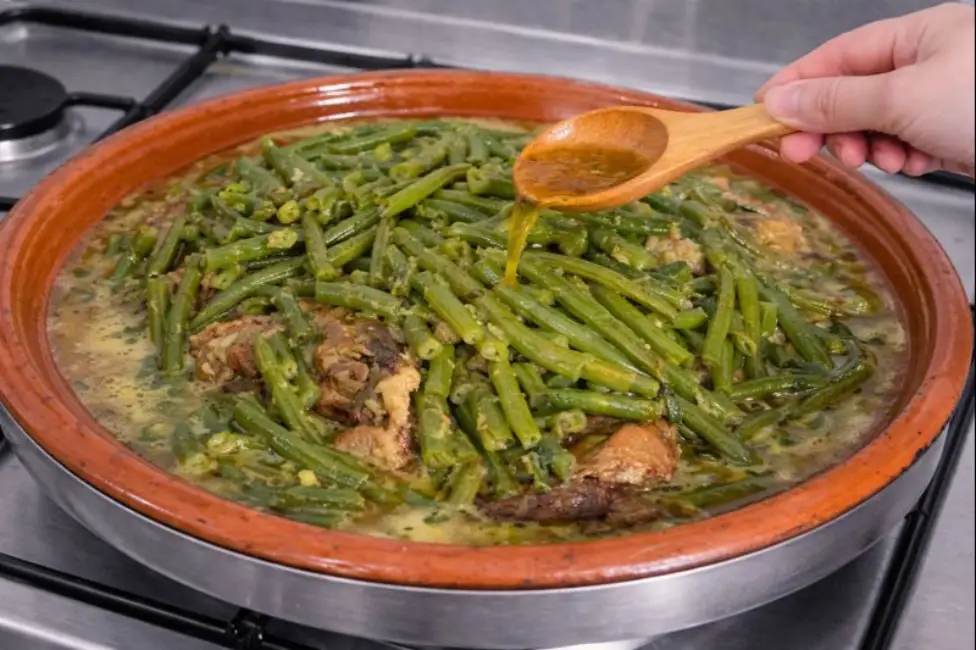
After about an hour, maybe more… the beef gives in.
You’ll feel it when you touch it.
Soft, but still holding its shape.
Now you add the beans.
Lay them on top. Don’t stir too much.
Cover again.
Let them sink in. Let them fall into the story.
Fifteen, twenty minutes more.
Then uncover.
The sauce should be thick.
Not runny. Not sticky. Just right.
You tilt the pot — it should move slowly, like honey.
That’s when you know:
It’s ready.
And so are you.
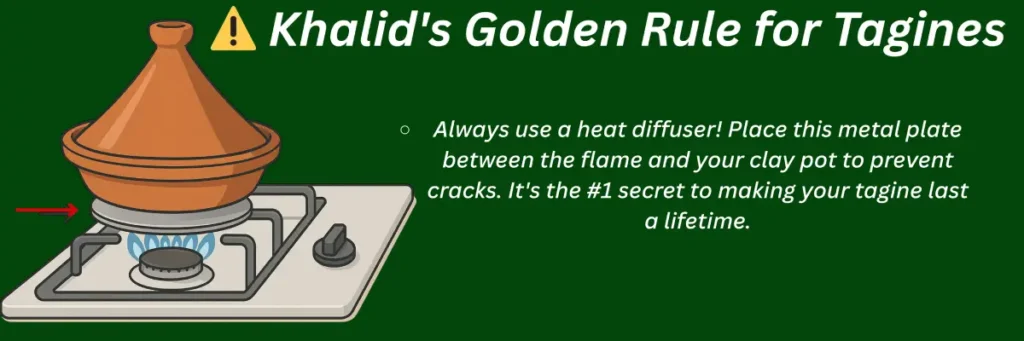
Easy Swaps for Any Kitchen (No Tagine? No Problem)
I know, I know.
You don’t have a tagine.
It’s fine.
A Dutch oven works. A heavy pot with a lid.
Even a slow cooker, if you don’t mind missing the scent in the kitchen.
The secret isn’t in the clay.
It’s in the slowness.
The layering. The respect for every step.
And use what you have.
Can’t find fresh green beans?
Use frozen — just don’t boil them first.
No turmeric? A bit of curry powder will get close.
No paprika? A touch of smoked chili, but not too much.
This dish isn’t about rules.It’s about feeling your way through it, one spoon at a time.
Tips and Variations
You don’t need a perfect kitchen. You just need curiosity and a little flexibility.
Can I Make This in a Slow Cooker or Dutch Oven?
Yes. Of course.
I’ve done it myself — when the clay tagine cracked, and I had nothing else.
If you’ve got a Dutch oven, heavy and thick, use it.
It keeps the heat low and steady. Like the old coal back home.
Slow cooker? That works too.
Just sear the beef in a pan first. Don’t skip that part.
That first color… It’s where the flavor lives.
Then layer everything. Beef. Onions. Tomato. Spices.
Let it cook low, four to six hours. More, if you can wait.
You won’t get the same smell in the house.
But the taste? Still full of soul.
What If I Don’t Have Moroccan Spices?
Don’t worry.
Spice is not a rulebook — it’s a feeling.
No turmeric? Use a bit of curry powder. Just a pinch.
No paprika? Try smoked paprika, or even mild chili powder.
Ginger? Ground is best, but fresh will do. Just use less.
And olive oil —
If you can, get the good kind.
But any oil with kindness in it will carry the dish.
This dish doesn’t punish you for missing an ingredient.
It invites you in anyway.
Gluten-Free? Paleo? Here’s What You Need to Know
The beauty of beef and green beans like this — it’s naturally simple.
No flour. No soy sauce. No processed thickeners.
It’s just vegetables. Meat. Spices. Water.
All slow-cooked until they become something else entirely.
If you’re gluten-free — perfect.
If you’re paleo — even better.
Just serve it with roasted potatoes instead of bread.
Or spoon it up just like that. No sides needed.
The dish is old. But it fits any table.
Other Vegetables You Can Use in This Stew
In spring? Green beans. Always.
But in other seasons?
- ✔️ Peas — soft, sweet, they melt into the sauce
- ✔️ Potatoes — cut them big, let them drink the broth
- ✔️ Zucchini — late summer, they fall apart in the best way
- ✔️ Carrots — sweet and strong, give structure
Mix them if you want. Or keep it simple.
I’ve made this stew a hundred ways, and it always feeds well.
Just remember:
- Cut the vegetables into big pieces. Let them hold their shape.
- Let the sauce speak through them.
Frequently Asked Questions
Some things people ask me often. Maybe you were wondering too.
How long should I cook beef in a Moroccan tagine?
Long enough for it to stop fighting the spoon.
Usually… an hour and a half. Sometimes more.
You’ll know when it’s ready — it yields. No resistance.
Touch it with a wooden spoon.
If it pushes back, it needs more time.
Don’t rush it. The meat has its own clock.
Can I freeze Moroccan beef and green beans stew?
Yes, yes — and it freezes well.
Let it cool first. Never freeze while it’s still hot.
Put it in portions, cover it tightly.
In the freezer, it sleeps. For a long time, two, three months.
Reheat it slowly. Add a bit of water.
And stir it gently… like you’re waking something that matters.
Do I need a tagine pot to make this recipe?
If you have one — beautiful.
If not, don’t worry.
Use a Dutch oven, or any heavy pot with a lid.
The soul of this dish doesn’t come from the pot.
It comes from patience.
What kind of beef works best for slow Moroccan stews?
Not the soft kind.
Give me beef that’s worked — shoulder, shank, maybe chuck.
Takes time to break down…
But once it does?
Ah, it melts into the sauce. Becomes part of the story.
Can I make this dish spicy?
Of course — if that’s what your tongue likes.
Add a bit of harissa. Or a chopped chili.
Not too much. Let the heat whisper, not scream.
Me? I like it warm, not wild.
But hey, it’s your kitchen.
How do I store leftovers and reheat them properly?
Fridge, 3–4 days.
Covered tight. Sauce thickens overnight — that’s the best part.
Reheat on the stove.
Low flame. Bit of water.
Let it come back slowly, like a memory.
Is this dish suitable for kids or picky eaters?
Yes. Always has been.
My nephews — picky like little cats — used to clean their plates.
The flavors are soft.
The sauce is sweet from the tomato, gentle from the spices.
Just skip the pepper if needed.
They’ll ask for seconds. Watch.
Can I make it ahead of time for meal prep?
You should.
Make it today, eat it tomorrow — it’s even better.
The beef and green beans become friends overnight.
That’s the magic of time.
Put it in your fridge, and thank yourself later.
What to Serve with Moroccan Beef and Green Beans
You’ve cooked something good. Now here’s how to complete the table — the Moroccan way, or your own.
Traditional Moroccan Sides: Bread, Tea, and Simplicity
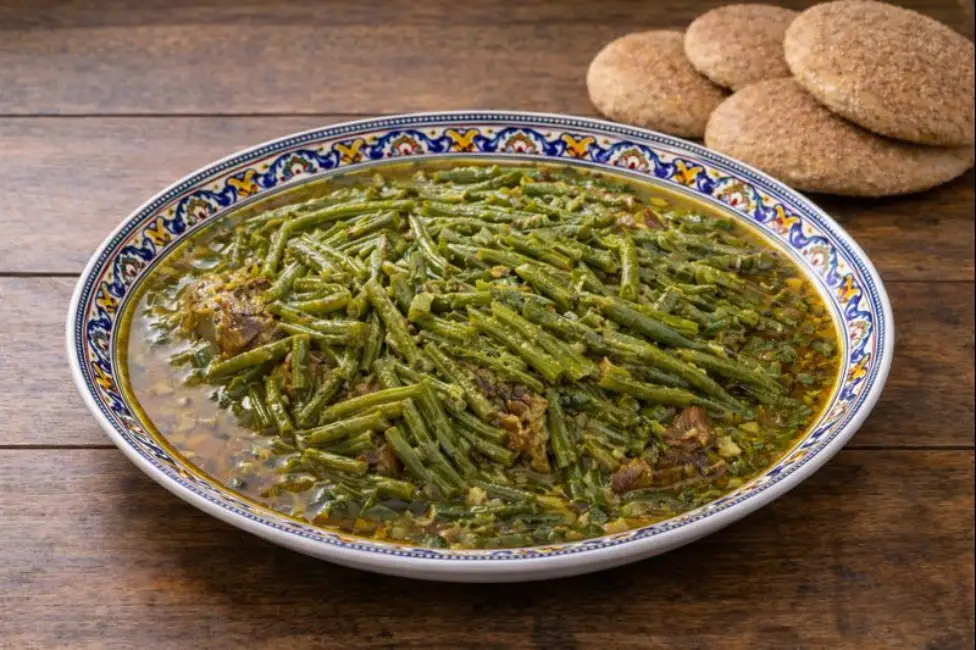
In Morocco, we don’t ask, “What should I serve it with?”
We already know.
Warm. Round. Homemade, if you’re lucky.
We don’t use forks — we scoop with bread. Tear a piece, catch the meat, soak the sauce.
No need for rice. No salad tower.
Just bread… and maybe mint tea.
Tea that’s hot and sweet.
You drink it after. It resets the mouth. Calms everything down.
That’s enough.
You don’t need more.
Western Pairings: Rice, Couscous, or Roasted Potatoes
But hey — if you’re somewhere else, you adapt.
And that’s okay.
- ✔️ White rice – to catch all that rich tomato sauce
- ✔️ Couscous – light, fast, perfect with spiced stew
- ✔️ Roasted potatoes – golden, crispy, they hold their own beside the beef
You can even do a crusty baguette if you want.
Or pita.
Anything that listens when you press it into the plate.
Just don’t serve it cold.
This dish — this beef and green beans — deserves warmth.
Storage and Reheating Tips for Busy Weeks
Life gets full. Schedules stack up.
But this stew? It waits for you.
Store it in a glass container with a tight lid.
Fridge: 3 to 4 days.
Freezer: longer. Even months.
To reheat:
Don’t microwave it if you can help it.
Put it on the stove. Low heat. Little water. Stir gently.
Bring it back with care.
You’ll see — it might taste even deeper the second time.
Save It, Share It, Make It Again
This dish… It’s made to last.
Not just in the fridge — in memory.
Make it once, and you’ll crave it again.
You’ll start recognizing the smell when the onions hit the oil.
Your kitchen will feel different. More… alive.
Pass it to someone.
Send them the recipe.
Tell them there’s a better way to cook green beans.
One with time.
And soul.
🧣 Wrap-up / Final Section
Now You Know. But the Tagine Will Teach You More.
You’ve got the steps.
The story.
The spice.
But listen — this dish… it doesn’t just live on the page.
It lives in the smell when the onions hit the oil.
In the sound of the sauce simmering slow.
In the first tear of bread into the pot.
Try it once.
Feel it.
Let it fill your kitchen. Let it feed more than hunger.
That’s when you’ll understand what Samira meant…
“Let it cook slow, and it will feed something deeper.”
Now go.
Your tagine — or whatever pot you have — is waiting
Watch the Tagine Come to Life — Step by Step
Feel free to share and drop a word below.

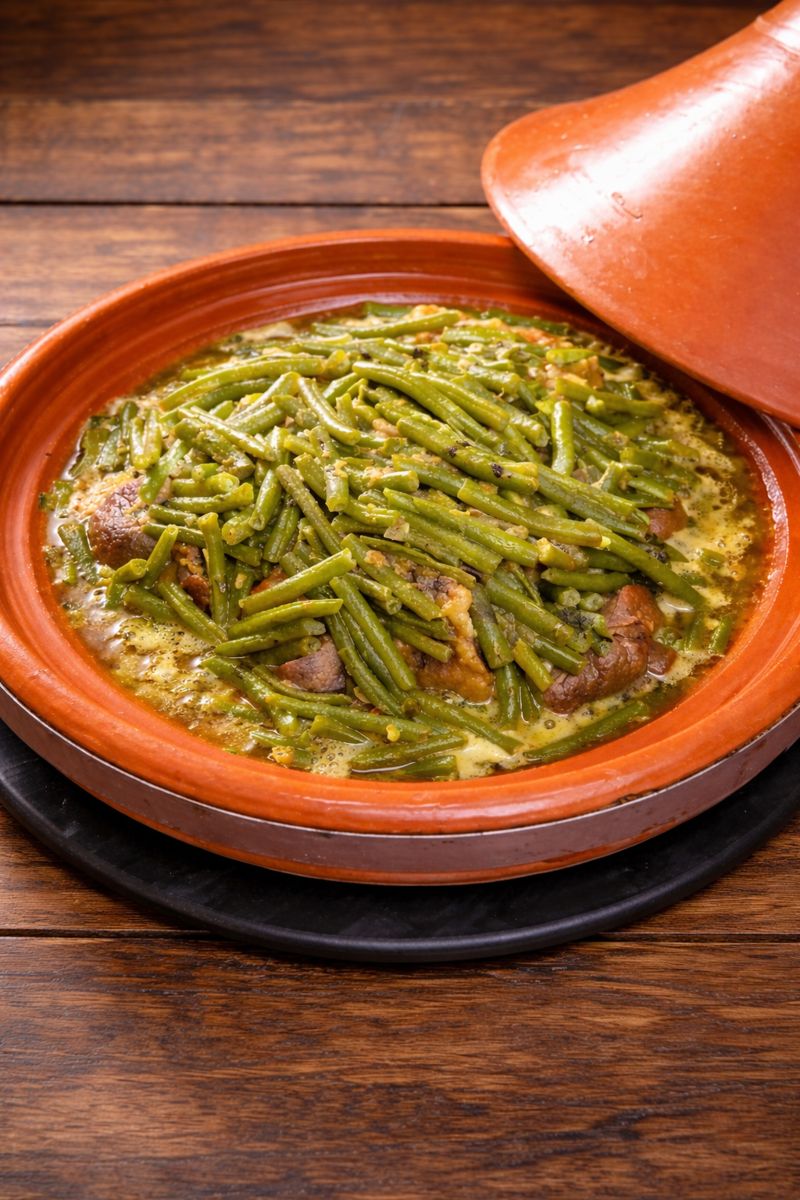
Moroccan Beef and Green Beans Tagine (Lhem bel Loubia)

Equipment
- Tagine pot OR Dutch oven / heavy lidded pot
- Small sauté pan (for green bean step)
- Wooden spoon
- Ladle or measuring cup
- Sharp knife
Ingredients
🥩 For the Meat & Base
- 1.5 lb 700 g beef shoulder or shank, cut into large chunks
- 2 tbsp olive oil
- 1 tbsp vegetable oil
- 2 medium onions chopped
- 2 –3 garlic cloves crushed
- 1 ripe tomato grated
- 1/2 tsp ground ginger
- 1/2 tsp turmeric
- 1/2 tsp paprika sweet
- 1/4 tsp ground black pepper
- 1 tsp salt or to taste
- 1/2 cups hot water adjust during cooking as needed
🥬 For the Green Beans
- 500 g fresh green beans, trimmed
- 2–3 ladlefuls of cooking sauce from the tagine approx. 1/4 cup
- A splash of water just enough to simmer gently
Instructions
Sear the Meat
- Heat olive oil and vegetable oil in the tagine or Dutch oven over medium heat.
- Add the beef pieces and sear on all sides until lightly browned.
- Do not add onions yet.
Add Onions and Salt
- Stir in the chopped onions and salt. Cook until onions are soft and translucent.
Add Garlic and Spices
- Add crushed garlic, then ground ginger, turmeric, paprika, and black pepper.
- Stir gently for 30 seconds — don’t let the spices burn.
Build the Sauce
- Add the grated tomato and stir.
- Pour in hot water to cover the beef halfway.
- Bring to a gentle simmer, cover, and reduce heat to low. Let it cook slowly for about 1 hour.
Prepare the Green Beans Separately
- In a small pan, scoop out 1/4 cup of the tagine’s sauce.
- Add the trimmed green beans, along with a pinch of salt and black pepper, and a small handful of chopped fresh parsley.
- Sauté gently over medium heat for 5–7 minutes, stirring occasionally until slightly tender.
- Remove from heat and set aside.
Combine and Finish Cooking
- After the beef has simmered for 1 hour, gently layer the pre-cooked green beans on top.
- Cover and cook together for another 30–40 minutes, or until beef is very tender and sauce is thickened.
Serve
- Let the tagine rest 5–10 minutes before serving.
- Serve hot with warm Moroccan bread, mint tea, or your favorite side.
Notes
- Beef selection: Use beef shank or shoulder for the best texture. Avoid lean cuts — they dry out.
- Green beans tip: Pre-cook green beans in a little sauce separately for 5 minutes before adding them to the stew.
- Spice flexibility: No turmeric? Use curry powder. No paprika? Try smoked paprika or mild chili.
- No tagine? Use a Dutch oven or slow cooker — the key is low heat and patience.
- Storage: Keeps 3–4 days in the fridge. Freeze in portions for up to 3 months. Reheat slowly on the stove.
- Serving: Traditionally served with Moroccan bread and mint tea. Also works with rice or roasted potatoes.
- Gluten-free & Paleo: Naturally gluten-free. Serve without bread or with roasted vegetables for a paleo version.
🥗 Nutritional Information (approximate, per serving)
| Nutrient | Amount |
| Calories | 430 kcal |
| Protein | 34 g |
| Fat | 25 g |
| Saturated Fat | 7 g |
| Carbohydrates | 14 g |
| Fiber | 4 g |
| Sugars | 5 g |
| Sodium | 580 mg |
⚠️ Important Note: These nutritional values are approximate and can vary depending on the exact cut of beef, type of oil used, and quantity of salt and spices.
If you change the portion size or substitute ingredients, the values may change significantly.
🚖 Don’t Let the Journey End Here
For 20 years, I drove through Morocco finding the best food hidden in small cafés and family kitchens. Now, I want to deliver those secrets straight to you.
Join the Tajine Recipes Family and get:
- ✨ Unwritten Secrets: Tips I only share with friends (not on the blog).
- 🥘 Weekly Inspiration: Authentic slow-cooked dinners for busy nights.
- 📖 The Stories: The culture and heart behind every spice.
📲 Don’t Miss the Next Secret
I share tips on social media that I don’t write on the blog. Follow along for quick hacks, behind-the-scenes stories, and real-time answers to your cooking questions.
💬 I Want to Hear Your Story
Did you try the “Two-Hour Rule”?
Tell me how it turned out! Did the meat melt? Did the green beans drink the sauce? Or maybe you added your own twist?
The comment section is the best part of this blog—it’s where we learn from each other. Don’t be shy, pull up a chair and let me know how your dinner tasted.
(I read and reply to every single one!)