Table of Contents
What Is Cooks Illustrated Zaalouk?
Moroccan spices.
You smell them before you understand them.
Cumin in the air. Garlic warming slowly. Olive oil whispering in the pot.
That is where zaalouk begins.
Not in a cookbook.
Not in a test kitchen.
In a home.
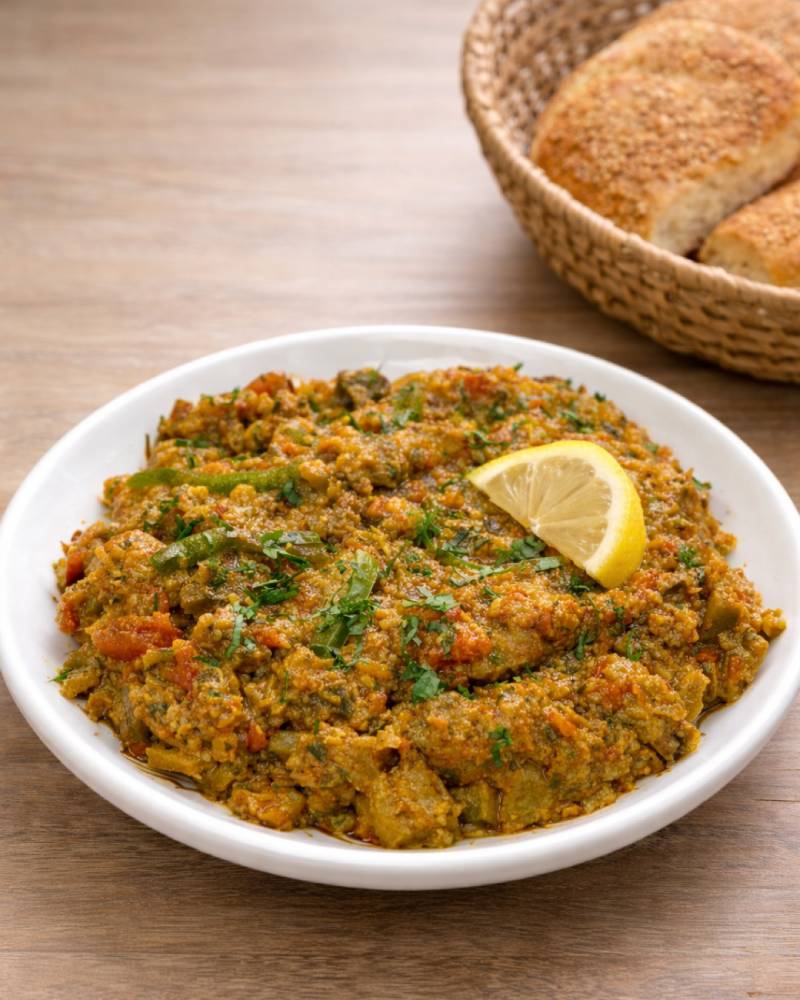
Zaalouk is a Moroccan eggplant salad.
But when you say “salad,” many people think of lettuce and raw greens.
No. This is different.
This is soft.
Warm.
Mashed gently with a wooden spoon.
Tomatoes melting into eggplant.
Olive oil catching the light.
It sits on the table like a quiet companion.
Always there. Never loud. But missed when absent.
What Makes Zaalouk a Moroccan Classic
In Morocco, we don’t serve meals alone.
We serve company.
Zaalouk is part of that company. A mezze. A side dish. A small plate that stays between people.
You tear bread.
You scoop.
You taste cumin first. Then garlic. Then the sweet softness of eggplant.
Why eggplant?
Because it absorbs flavor like a sponge.
It takes spices into its body.
It becomes deeper than it was alone.
That is why we cut it small.
That is why we let it cook slowly.
So it stops being vegetable… and becomes memory.
Why “Cooks Illustrated” Changes the Approach
Now listen carefully.
Cooks Illustrated is about precision.
Measurements exact.
Moisture controlled.
Heat managed.
That is good. Very good.
Because zaalouk can go wrong.
Too much water? It becomes soup.
Too much heat? It burns at the bottom and tastes bitter.
Not enough salt? It feels empty.
Precision matters.
But heart matters more.
You control heat so the eggplant softens gently.
You add vinegar at the end — not before — so the brightness stays alive.
You mash while it’s still warm so the texture becomes silky, not rough.
Technique gives structure.
Heart gives soul.
And zaalouk needs both.
Ingredients for Authentic Cooks Illustrated Zaalouk
Moroccan spices again.
But spices alone do nothing.
Ingredients matter.
Simple ones.
Poor man’s vegetables.
But treated with respect.
This is not a long list.
It is a careful list.
Core Ingredients That Build the Flavor
Let me tell you what truly makes this tomato and eggplant dip alive.
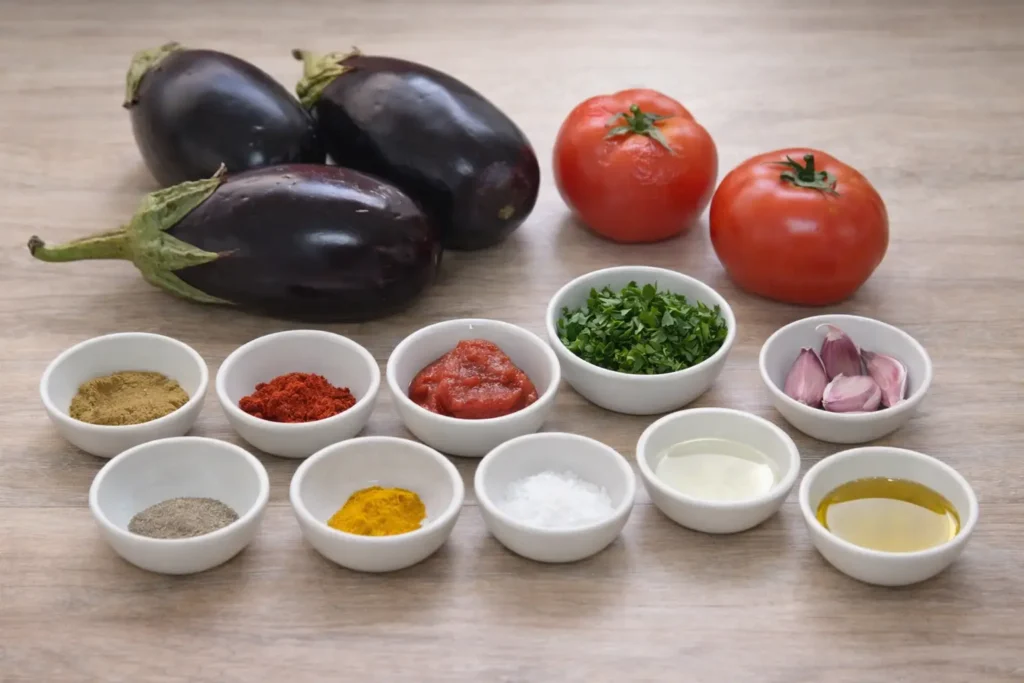
✔️ Eggplant
The body. The heart.
Soft when cooked right. Creamy when mashed warm.
It carries every spice inside it.
That is why we cut it small — so it cooks evenly, no stubborn pieces.
✔️ Tomatoes
They bring moisture. Sweetness. Light acidity.
When they melt into eggplant, the texture becomes silky.
Not chunky. Not watery. Just smooth and generous.
✔️ Garlic and cumin
These two… they are old friends.
Garlic gives warmth.
Cumin gives earth.
If you add cumin too late, it tastes raw.
If you bloom it in the heat, it becomes round and deep.
✔️ Paprika seasoning
Paprika is not for fire.
It is for color and softness.
It gives that deep sunset tone to the dish.
✔️ Olive oil
Not just fat.
Flavor. Fruit.
A good olive oil turns a simple vegetable into something rich.
You add some at the beginning… and some at the end.
Because fresh olive oil on top smells alive.
✔️ Fresh parsley (maadnouss)
It cuts through the softness.
It wakes the dish up.
Without it, everything feels heavy.
✔️ Tomato paste (optional)
Just a spoon.
Not for taste. For depth.
It concentrates the tomato. Makes the base stronger.
✔️ Vinegar in cooking
Ah. This is important.
Not lemon. Vinegar.
Added at the end.
It sharpens everything. Makes the flavors stand up straight.
“A dish without balance is like bread without salt. It fills you, but it doesn’t satisfy.”
Choosing the Right Eggplant
Now listen carefully.
Not all eggplants are equal.
You want one that feels heavy for its size.
Skin tight. Shiny. No wrinkles.
If it feels light… it is old.
Old eggplant drinks oil and gives nothing back.
How to cook eggplant properly
Eggplant must soften completely.
If it stays firm, it tastes bitter and spongy.
Small cubes cook evenly.
Covered pot at first — to trap steam.
Then uncovered — to dry the excess water.
That is control.
That is precision.
How to remove bitterness from eggplant
People talk about salting it first.
Sometimes yes.
But fresh eggplant today is rarely bitter.
The real secret?
Cook it fully.
Undercooked eggplant is what tastes bitter.
Heat transforms it.
Roasting vs stovetop eggplant
Roasting gives smoke.
Deep, almost grilled flavor.
Stovetop in a cocotte gives softness.
Moist. Unified. Gentle.
For this Cooks Illustrated style?
Stovetop gives you more control over texture.
And texture… is everything in zaalouk.
The Role of Vinegar in Moroccan Cooking
Vinegar is not there to dominate.
It is there to wake up the dish.
A tangy vinegar finish added at the end keeps brightness alive.
If you cook it too long, it disappears.
Why add it late?
Because acidity fades under heat.
We want it sharp. Clean.
This is about balancing acidity.
Eggplant is soft.
Tomato is sweet.
Olive oil is rich.
Without acid, the dish feels heavy.
With just two spoons of vinegar?
It becomes alive.
Balanced.
Deep.
That is what gives depth of flavor.
Not more spice.
Not more salt.
Balance.
And balance is what separates a good cook… from a careful one.
How to Cook Cooks Illustrated Zaalouk Step by Step
Moroccan spices are patient.
They don’t shout.
They wait for heat… and for your hands to do things properly.
Zaalouk is not difficult.
But it demands attention.
You cannot rush eggplant.
Eggplant teaches humility.
Preparing the Vegetables the Moroccan Way
First, the knife.
Not fast.
Not fancy.
Just steady.
How to dice eggplant
Cut off the green top.
Keep the skin if it’s young and tight. That skin holds flavor.
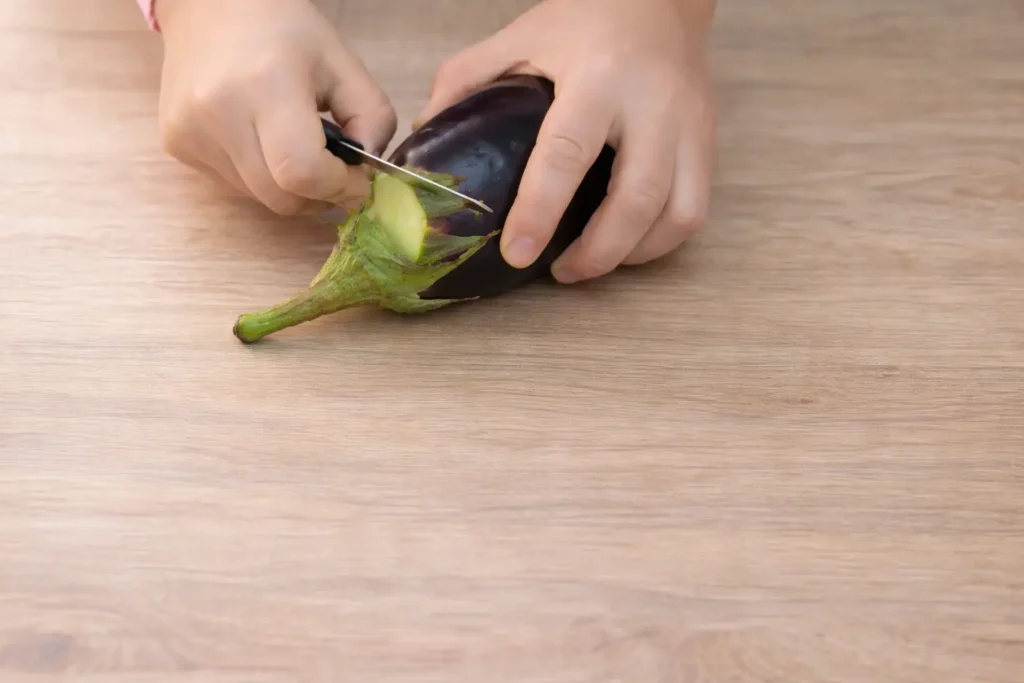
Slice into strips.
Then into small cubes.
Small matters.
Large cubes cook unevenly.
Small cubes melt together.
Zaalouk is not chunks. It is harmony.
This is not decoration.
This is texture control.
Knife skills for vegetables
Tomatoes must match the eggplant.
Same size. Same respect.
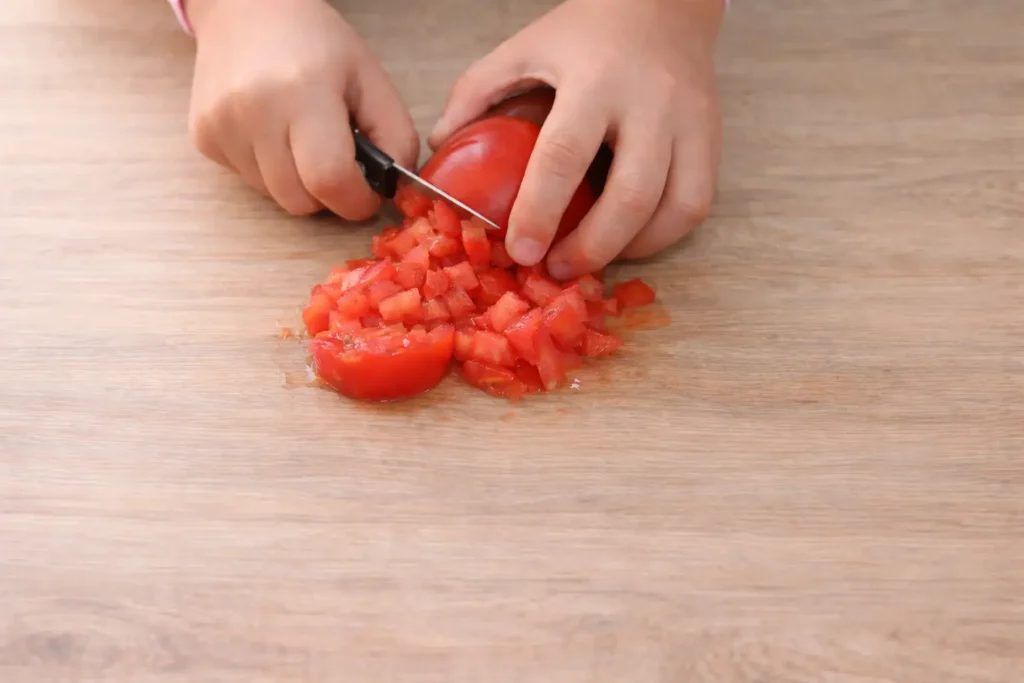
When vegetables are cut evenly, they cook evenly.
When they cook evenly, the flavor blends naturally.
A good cook does not fight the pan.
He prepares before the heat.
Removing tomato skin
You can peel them with a knife.
Or drop them in boiling water for a few seconds.
Why remove the skin?
Because tomato skin floats.
It separates.
It disturbs the smooth texture.
We want a rich tomato base.
Not little pieces of skin interrupting every bite.
Mixing Everything Cold in the Pot (Traditional Method)
Now this part…
This is where many people make a mistake.
They heat oil first.
They sauté garlic.
That is another style.
But the traditional Moroccan way?
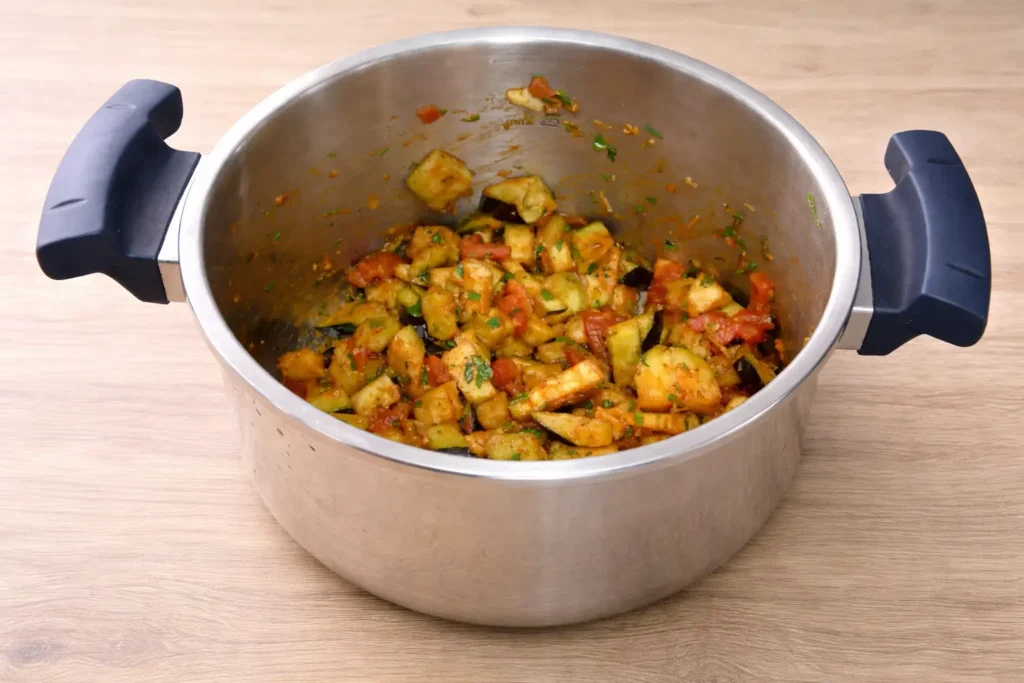
Everything goes in cold.
Tomatoes.
Spices.
Garlic.
Parsley.
A little water.
Olive oil.
All together.
This is a one-pot eggplant dish.
Simple. Honest.
In a Dutch oven.
Or better — a cocotte.
Heavy bottom. Thick walls.
Cocotte cooking gives control.
It holds heat evenly.
It protects the bottom from burning.
Why mix cold?
Because flavors build slowly together.
They marry.
They don’t attack each other.
Then you place the pot on strong heat just until it wakes up.
Then immediately lower.
Cover.
Let steam do its work.
Controlling Heat for Perfect Texture
This is where precision matters.
Stovetop simmering.
Not boiling.
Boiling breaks structure.
Simmering softens gently.
Slow cooking vegetables releases water naturally.
Eggplant carries moisture inside.
If you rush, you trap that water.
If you are patient, it evaporates at the right time.
After 15–17 minutes, open the lid.
Now watch.
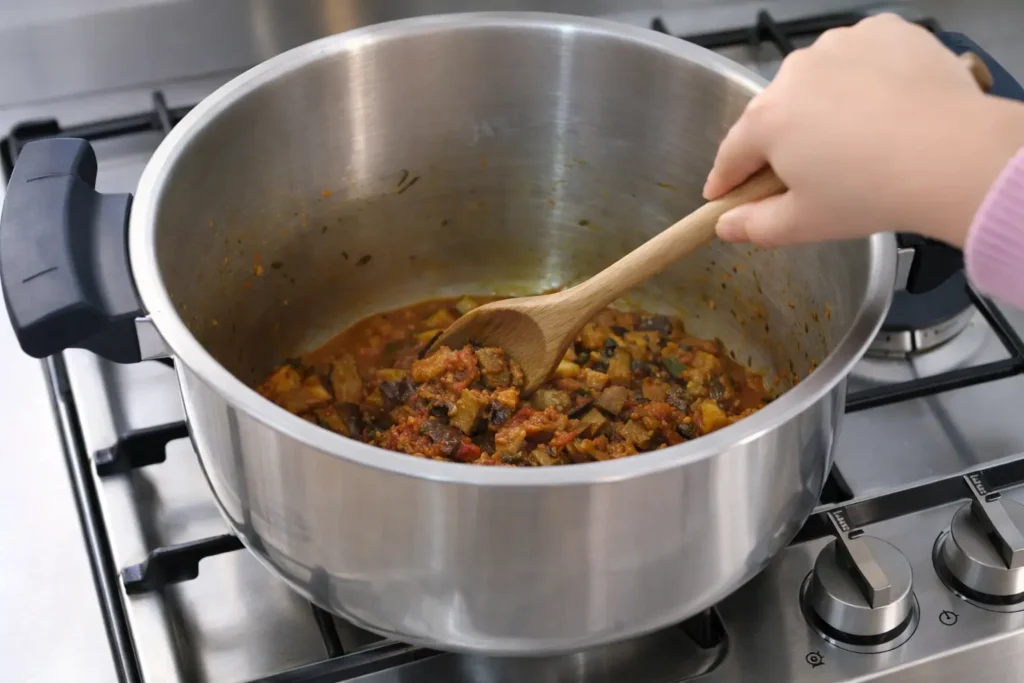
If there is too much liquid, leave it uncovered.
Let it reduce.
Reducing excess moisture is not about dryness.
It is about concentration.
A simmered vegetable salad should be moist…
but not swimming.
The spoon should leave a path at the bottom of the pot.
That is how you know.
The Final Smash: Creating the Perfect Spread
Now comes the part I love.
You take the wooden spoon.
Not metal. Wood.
And you begin to press.
Not violently.
Gently.
Warm eggplant crushes easily.
If you wait too long and it cools, it resists.
You want a silky texture eggplant.
Not baby food.
Not chunks.
Press. Fold. Press again.
You are turning vegetables into a thick vegetable spread.
This is where the rich tomato base wraps around everything.
You taste.
Maybe a little more salt.
Maybe a drop more olive oil.
And when the spoon stands softly in the mixture without falling…
you know it is ready.
Not because a timer said so.
Because the texture told you.
“The pot speaks. A cook must learn to listen.”
Why This Moroccan Eggplant Dish Is Surprisingly Healthy
Moroccan spices do more than perfume a kitchen.
They work quietly. Inside the body.
People look at zaalouk and see a dip.
A spread.
Something to scoop with bread.
But this Moroccan eggplant dish…
it is lighter than it looks.
It fills you.
Without weighing you down.
A Mediterranean Diet Classic
Today, many people speak about the Mediterranean diet.
Olive oil.
Vegetables.
Simple food.
No heavy sauces.
We have been eating like this in Morocco for generations.
Zaalouk is a plant-based Moroccan dish.
No cream.
No butter.
No meat hiding inside.
Just eggplant.
Tomato.
Garlic.
Olive oil.
Spices.
It is naturally a vegan eggplant dip.
But we never called it vegan.
We called it lunch.
Why does this matter?
Because vegetables cooked slowly in olive oil digest gently.
They satisfy hunger without making the body tired.
You eat.
You feel nourished.
Not sleepy.
That is balance.
The Health Benefits of Eggplant and Olive Oil
Let us speak plainly.
Eggplant is humble.
Cheap.
Common.
But inside?
It is full of fiber-rich goodness.
Fiber slows digestion.
Keeps the stomach calm.
Keeps you full longer.
Eggplant is also antioxidant-rich.
That deep purple skin?
That color is not decoration.
It protects the plant… and it helps protect you too.
And olive oil…
Ah.
Heart-healthy olive oil is not a modern discovery.
Our grandmothers did not read studies.
They watched their elders live long.
Good olive oil supports the heart.
It softens inflammation.
It carries flavor without heaviness.
Then come the anti-inflammatory spices.
Cumin.
Paprika.
Turmeric.
They warm the body.
Help digestion.
Reduce that heavy feeling after eating.
But here is the real secret.
It is not just the ingredients.
It is the method.
Slow cooking.
Moderate heat.
No frying in deep oil.
No burning.
When you respect ingredients…
they respect your body.
Zaalouk is not diet food.
It is honest food.
And honest food is usually the healthiest kind.
Tools That Make a Difference
Moroccan spices are important.
Eggplant is important.
But listen…
The pot matters too.
You cannot cook something delicate in a thin, nervous pan.
Zaalouk needs calm walls around it.
Cooking in a Cocotte or Dutch Oven
A heavy pot changes everything.
Cast iron cooking holds heat steady.
It does not jump.
It does not panic when the flame rises.
When heat is stable, vegetables soften evenly.
No burning at the bottom.
No raw pieces hiding inside.
In Morocco, we often use a traditional clay pot.
Thick. Earthy. Slow to heat. Slow to cool.
Clay breathes.
It keeps moisture gentle.
It respects slow cooking.
A Dutch oven works the same way.
Heavy base.
Tight lid.
Even heat.
Why does this matter?
Because eggplant releases water as it cooks.
If the pot is too thin, that water burns before it reduces.
If the pot is heavy, the moisture evaporates gradually.
This is how you build a simmered vegetable salad with control.
Precision is not only in measuring spices.
It is in choosing the right vessel.
Why a Wooden Spoon Matters
Now this may sound small.
But it is not.
A wooden spoon changes texture.
Metal cuts.
Wood presses.
When you do wooden spoon mixing, you are not just stirring.
You are shaping.
You press the eggplant gently against the side of the pot.
You fold the tomato into it.
You feel resistance.
That feeling tells you if it is ready.
This is texture control.
If it is too wet, the spoon slides too easily.
If it is too dry, it drags and sticks.
Wood gives feedback.
Your hand understands before your eyes do.
“A good spoon teaches the cook more than a thermometer.”
Tools do not make the dish.
But the right tools make the dish honest.
Texture, Flavor & Troubleshooting
Moroccan spices can forgive many things.
But texture?
Texture never lies.
Zaalouk must be soft…
but not loose.
Rich…
but not heavy.
If something feels wrong, the pot will tell you.
You just have to listen.
If Your Zaalouk Is Too Watery
This happens often.
Eggplant holds water.
Tomatoes release water.
If you close the lid too long…
you trap it all inside.
Now the dish looks like soup.
Do not panic.
Remove the lid.
Lower the flame slightly.
Let it breathe.
Reducing sauce properly is not about high heat.
High heat burns the bottom.
It is about patience.
Slow evaporation.
Gentle bubbling.
Stir occasionally so nothing sticks.
This is managing vegetable moisture.
Vegetables are alive.
They release water in their own rhythm.
You guide them.
You don’t fight them.
When the spoon leaves a clear path at the bottom of the pot…
you are close.
If It Lacks Depth
Sometimes you taste it and think…
It’s fine.
But it’s flat.
That means something is missing.
First, salt.
Salt is not just salty.
Salt wakes up flavor.
Then cumin.
Adjusting cumin and paprika must be done carefully.
Too much cumin becomes bitter.
Too much paprika dulls the dish.
Add a pinch.
Stir.
Wait one minute.
Taste again.
Depth also comes from balancing salt and acidity.
This is where vinegar helps.
If it tastes heavy… add a few drops.
If it tastes sharp… add a small splash of olive oil.
Flavor is balance.
Not domination.
Getting That Authentic Moroccan Taste
Now we speak of soul.
Authentic Moroccan taste is not one spice.
It is harmony.
Bold garlic flavor — but not raw.
Garlic must soften in heat.
It should warm the mouth, not sting it.
Smoky eggplant flavor can come from roasting first.
Or from letting it caramelize slightly at the bottom — just a little — before stirring.
Not burnt.
Just kissed by heat.
And then there is rustic tradition.
Rustic means imperfect.
Slightly uneven texture.
Hand-mashed.
Not blended smooth like baby food.
You should feel the vegetable.
But gently.
That is how our mothers did it.
No thermometers.
No timers.
Just the sound of simmering.
The smell of cumin rising.
The weight of the spoon in the hand.
“When it smells right and feels right, it is right.”
How Moroccans Really Serve Zaalouk
Moroccan spices fill the kitchen first.
But zaalouk is not finished in the pot.
It is finished on the table.
Because in Morocco, food is not plated.
It is placed.
Placed between people.
As a Side Dish or Mezze
Zaalouk is never alone.
It arrives with others.
Olives.
Fresh bread.
Maybe grilled peppers.
Maybe tomatoes with onions.
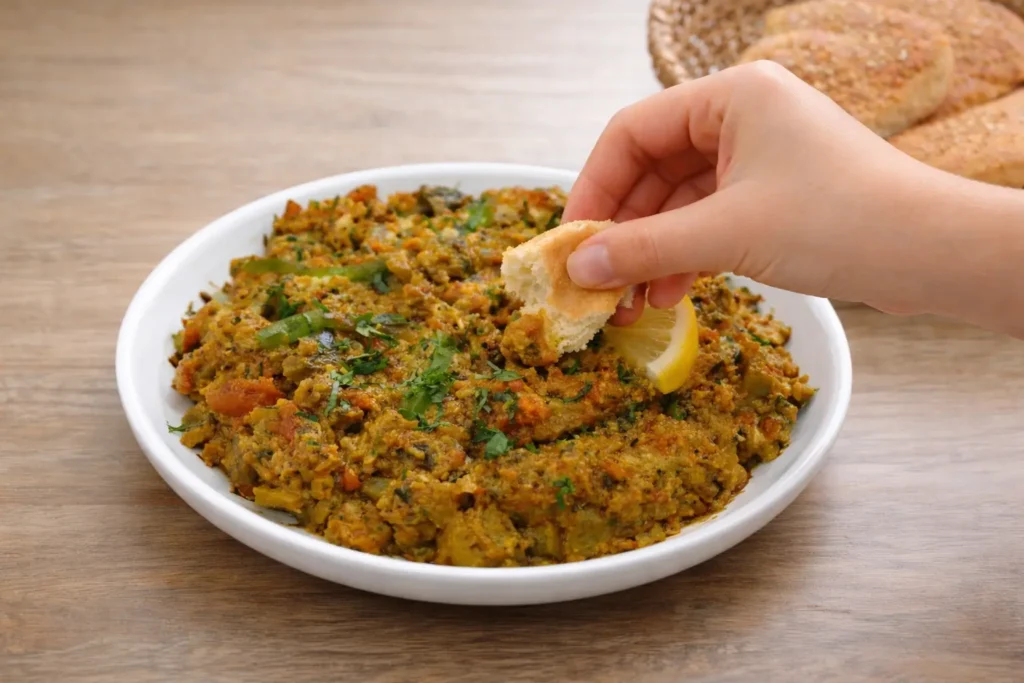
This is Moroccan mezze.
Small dishes.
Big presence.
You don’t scoop it with a spoon.
You tear bread.
You press gently.
You lift.
It becomes a homemade Moroccan dip in that moment.
But we never called it “dip.”
We called it salad.
We called it something to share.
Why serve it this way?
Because zaalouk is rich but gentle.
It balances grilled meat.
It softens spicy dishes.
It cools the mouth without being cold.
It is support.
Quiet support.
On the Family Table, Every Day
Now let me tell you something personal.
When I was young… I did not like zaalouk.
I thought it was soft.
Too soft.
Too simple.
But my mother loved it.
Almost every day, there was a small plate on the table.
Right there.
Between her and my father.
Not large.
Just enough.
I can still see it.
That little plate never disappeared.
It was the only dish everyone loved — except me.
At that time.
And then something changed.
Maybe I grew.
Maybe my tongue learned patience.
One day I tasted it differently.
I tasted the cumin.
The vinegar at the end.
The olive oil shining on top.
And suddenly… I understood.
This is a Moroccan family recipe.
A heritage dish.
Comfort food before we knew that word.
Today, you will find zaalouk in almost every Moroccan home.
On daily tables.
At celebrations.
At simple lunches.
It does not try to impress.
It simply belongs.
“Some dishes you understand with your mouth.
Others you understand with time.”
Zaalouk is the second kind.
FAQ: Cooks Illustrated Zaalouk
What is zaalouk, exactly?
Zaalouk is a Moroccan eggplant salad. Soft. Warm. Mashed.
Think of it like a tomato-and-eggplant spread you scoop with bread—simple, smoky, and full of Moroccan spices.
Is zaalouk served hot or cold?
Both.
At home, it’s often served warm first… then enjoyed cold later.
The flavors actually deepen as it rests.
Do I have to peel the eggplant?
No.
If the skin is thin, shiny, and the eggplant is fresh, you can keep it.
Peeling is optional—keeping the skin can add depth and a more rustic feel.
How do I stop zaalouk from being watery?
Don’t rush.
Cook covered at first to soften, then uncover to reduce.
If you still have too much liquid, keep the lid off and let it evaporate slowly while stirring.
Why do you add vinegar at the end?
Because heat kills brightness.
Vinegar added at the end stays sharp and clean.
It balances the olive oil, lifts the tomatoes, and makes the eggplant taste alive.
Can I roast the eggplant instead of cooking it in the pot?
Yes.
Roasting gives a deeper, smoky eggplant flavor.
Stovetop cocotte cooking gives smoother texture control.
Both work—choose smoke or silk.
Is zaalouk vegan and healthy?
Yes. Naturally.
It’s a plant-based Moroccan dish: eggplant, tomatoes, garlic, olive oil, spices.
No butter. No cream.
It’s also Mediterranean-diet friendly.
What bread is best with zaalouk?
Moroccan khobz is the classic.
But any crusty bread works—something you can tear and scoop with.
Soft bread makes it messy. Crusty bread makes it clean.
How long does zaalouk keep in the fridge?
About 3 to 4 days in a sealed container.
A little olive oil on top helps protect it and keeps it tasting fresh.
Can I freeze zaalouk?
You can, but the texture may change.
Eggplant can get a little softer after thawing.
If you freeze it, reheat gently and reduce again if needed.
Final Thoughts: Cooking with Precision, Cooking with Heart
Moroccan spices teach patience.
Cooks Illustrated teaches precision.
And somewhere between the two…
there is truth.
You can measure cumin to the gram.
You can time the simmer to the minute.
You can control moisture like a scientist.
That is good.
Precision protects the dish.
But precision alone does not make people close their eyes when they taste.
Heart does that.
Technique tells you how.
Memory tells you why.
You cut the eggplant small not just for even cooking…
but because you learned that texture matters.
You add vinegar at the end not just for acidity…
but because someone before you discovered it keeps the flavor alive.
You use a heavy pot not just for heat control…
but because slow cooking builds depth.
And then… there is that small plate.
I still see it.
A little dish of zaalouk.
Placed quietly between my mother and my father.
Not in the center of the table.
Not decorated.
Just present.
I did not understand it then.
Now I do.
That plate was not just food.
It was rhythm.
It was habit.
It was love that did not need words.
Today, when I make Cooks Illustrated zaalouk with careful measurements and steady heat…
I still mash it with a wooden spoon the same way.
Because precision builds structure.
But heart builds memory.
And if you can cook with both…
You are not just following a recipe.
You are continuing a story.
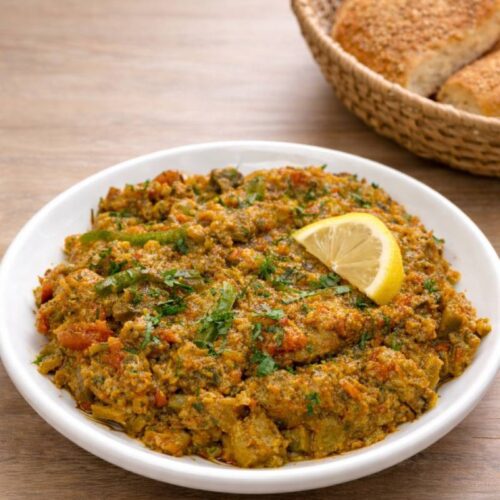
How to Make the Perfect Cooks Illustrated Zaalouk with Heart

Equipment
- 1 Dutch oven or cocotte (heavy pot with lid)
- 1 Wooden spoon (for gentle mashing)
- 1 Chef's Knife & Cutting Board
Ingredients
- 3 medium eggplants about 2 lb / 900 g, cut into ½-inch cubes
- 3 medium tomatoes about 1½ lb / 680 g, diced (peeled optional)
- 4 cloves garlic finely minced or grated
- ¼ cup extra-virgin olive oil plus 1 tbsp for finishing
- ¼ cup chopped fresh parsley or half parsley/half cilantro
- 2 tsp ground cumin
- 1 tsp sweet paprika
- ¼ tsp black pepper
- 1 tsp kosher salt plus more to taste
- 1 tbsp tomato paste optional, for depth
- ¼ cup water
- 1½ to 2 tbsp vinegar white vinegar or red wine vinegar, added at the end
- Optional: pinch cayenne for gentle heat
Instructions
- Prep the vegetables.
- Dice the eggplant into small ½-inch cubes for even cooking. Dice tomatoes to a similar size. (Optional: peel tomatoes to keep the texture silky.)
- Cold-start the pot (traditional Moroccan method).
- In a Dutch oven/cocotte, add eggplant, tomatoes, garlic, parsley, cumin, paprika, pepper, salt, tomato paste (if using), olive oil (¼ cup), and water. Stir well while the pot is still cold.
- Bring up gently, then cover.
- Place over medium-high heat until you hear the first active bubbling (2–4 minutes), then immediately reduce to low. Cover and simmer 15–17 minutes, stirring once halfway through, until eggplant is very soft.
- Uncover and reduce excess moisture.
- Remove the lid. Keep a gentle simmer (low to medium-low) and cook 10–15 minutes, stirring often, until the mixture thickens. You want it moist but not watery—a spoon should leave a clear path on the bottom of the pot.
- Mash warm for the right texture.
- Turn off the heat. Using a wooden spoon, press and fold the vegetables to create a thick, silky spread—not purée-smooth, not chunky.
- Finish with vinegar (do not cook it).
- Stir in 1½ tbsp vinegar, taste, then add up to ½ tbsp more if needed. Drizzle 1 tbsp olive oil on top.
- Serve.
- Serve warm or room temperature with bread. Garnish with extra parsley and another small drizzle of olive oil.
Notes
- Too watery? Keep it uncovered longer at a gentle simmer. High heat reduces faster—but risks burning and bitterness.
- Eggplant bitterness: Fresh eggplant is usually fine. The real fix is fully cooking it until soft.
- Vinegar matters: Add it at the end so the brightness stays sharp and clean.
- Want smoky flavor? Roast the eggplant cubes at 450°F / 230°C for ~20 minutes (tossed with a little oil), then continue from Step 2 using the same cold-start base.
- Storage: Refrigerate up to 4 days. Rewarm gently or serve at room temp. Flavors deepen overnight.
🥗 Nutrition Information – Cooks Illustrated Zaalouk (Per Serving)
| Nutrient | Amount |
|---|---|
| Calories | 150 kcal |
| Total Fat | 10 g |
| Saturated Fat | 1.5 g |
| Cholesterol | 0 mg |
| Sodium | 300 mg |
| Total Carbohydrates | 13 g |
| Dietary Fiber | 5 g |
| Sugars | 6 g |
| Protein | 2 g |
| Vitamin A | 15% DV |
| Vitamin C | 30% DV |
| Calcium | 4% DV |
| Iron | 6% DV |
Note: Nutritional values are approximate and may vary depending on the exact ingredients used. Based on a serving size of 4 portions. This dish is naturally vegan, gluten-free, and rich in fiber and antioxidants.
Follow Along on Social (More Moroccan Flavor, Every Week)
If you loved this cooks illustrated Zaalouk, come hang out with me on social—where I share the real-life details that don’t always fit in a recipe card: the smell of cumin blooming in oil, the “spoon leaves a path” moment, and the small fixes that save a watery pot.
What you’ll find there:
- Quick Moroccan cooking tips (texture, heat, moisture control)
- Short videos + step-by-step reels (no fluff, just the method)
- New recipes before they hit the site
- Behind-the-scenes stories from the Moroccan table
Get the Real Taste of Moroccan Zaalouk (Plus the Texture Tricks No One Tells You)
If you’ve ever made zaalouk and ended up with something watery, bitter, or flat… you’re not alone. The difference isn’t “more spices.” It’s control: steady heat, moisture management, and that final vinegar finish that keeps everything bright.
Subscribe and I’ll send you Moroccan recipes the way we actually cook them—simple, warm, and built on technique + memory.
When you join, you’ll get:
Moroccan flavors beyond the clichés—eggplant, tomatoes, olive oil, and spice done right
Printable recipes written for real home cooks (clear steps, no guesswork)
Texture cues that matter (like the “spoon leaves a path” test)
Fixes for common mistakes (too wet, too bland, too heavy)
👉 Subscribe now and get my Cooks Illustrated Zaalouk recipe + my best texture notes
Unsubscribe anytime. No stress. Just good food.
📩 Join Our Moroccan Foodie Community
Get the best Moroccan tagine recipes and seasonal culinary tips straight to your inbox.
Leave a Comment (I Read Every One)
Did you make this cooks illustrated Zaalouk? Tell me how it turned out.
In your comment, share:
- Did you like it warm or room temperature?
- Was your texture silky or more rustic?
- Did you use vinegar at the end (and how much)?
- Any tweaks—extra garlic, more cumin, roasted eggplant?