Disclosure: This article contains affiliate links. If you buy through them, I may earn a small commission at no extra cost to you.
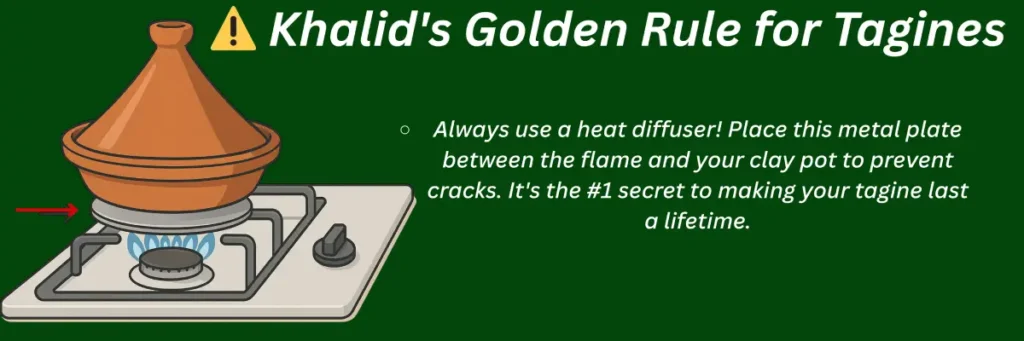
Table of Contents
Vegetarian Tagine Recipe. Maybe this is what brings you here. In my house, we did not call it that. We just knew it was the good spring dish my mother made when fava beans and artichokes were cheap in the market and beautiful on the stall.
I remember those days well. We were seven in the house. My father, my mother, two brothers, three sisters, and me. When my mother came back from the market with fava beans and artichokes, I already knew what kind of lunch we were going to have. Not a rich man’s lunch. Not a feast with meat. But something honest. Something that filled the table in a quiet way.
I loved meat then. I still love it now. But this dish never felt small to me. That is what stayed in my mind all these years. My mother made it without meat, but when the pot opened and the steam came up, it smelled like a dish that had been given real care. Garlic. Cilantro. A little ginger. Turmeric. Lemon. Not too much water. Never too much water. That was one of her ways.
If you are new to this kind of cooking, it helps to understand what makes a true Moroccan tagine different from a simple stew, and I explain that more clearly in my Ultimate Guide to Authentic Moroccan Tagine.
She did something important with the fava beans first. She did not throw them straight into the pot. She washed them, opened them lightly with the knife, then put them to steam in the couscoussier until they were halfway cooked. She used to say this made them cleaner in taste. It kept them pale. It helped the sauce stay white and not turn dark. That small step tells you a lot about Moroccan home cooking. The dish begins before the pot begins.
The artichokes also needed care. Once cleaned, they went straight into lemon water. If you leave them like that on the side, they darken and lose their beauty. My mother did not like that. She wanted the dish to come to the table looking clean, light, and calm.
This is why I still respect this tagine. It is simple, yes, but not careless. It asks you to pay attention. To the color of the vegetables. To the amount of water. To the heat. To the moment when the sauce is enough and should go no further. When it is done well, you sit down with bread, tear off a piece, dip it into that light sauce, and you do not ask where the meat is. You just eat.
Watch How to Make This Vegetarian Tagine
This short video shows the full process, from preparation to the final dish.
Take a moment to see how everything comes together.
Why This Dish Matters in a Moroccan Home
In Morocco, this is the kind of dish that comes by season. You see the fava beans. You see the artichokes. You do not need anyone to explain much after that. You just know.
This is how many homes cook. Not from a paper. Not from a plan made three days before. From the market. From the season. From what looks good and what the pocket can carry. I grew up with that way.
My mother would come back from the market, put the basket down, and already the meal had started, even before the fire. I can still see the vegetables on the table. The fava beans. The artichokes. The lemon waiting on the side. The knife. The bowl of water. The apron. The quiet of the kitchen before the bubbling starts.
This is not rich people’s food. But it never felt poor. That is something important in Moroccan cooking. A dish does not need meat to feel generous. It needs care. It needs the right hand. It needs someone who knows when to leave things alone.
With a dish like this, small things matter. Very small things. The fava beans must be handled first. The artichokes must not darken. The water must stay low. The fire must stay calm. The spices must stay in their place.
Too much water, and the dish loses itself. Too much spice, and you stop tasting the vegetable. Too much fire, and everything turns tired. But when it is done right, ah.
The smell comes first. Soft garlic. Cilantro. That warm smell of ginger and turmeric opening in the steam. Not heavy. Not loud. Just enough to make you come closer to the pot.
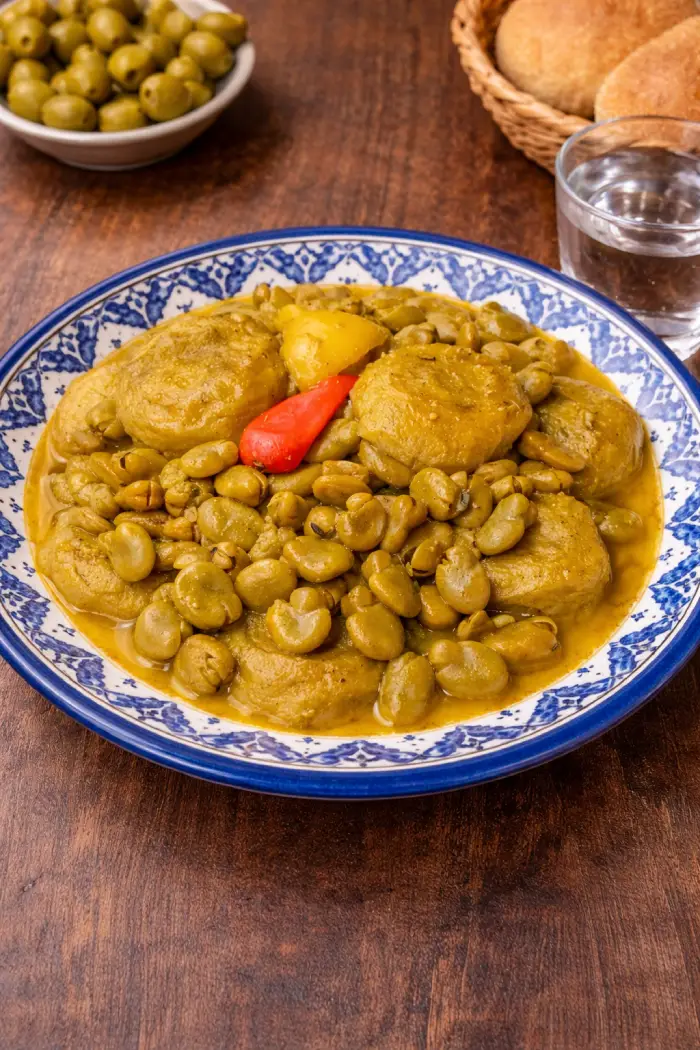
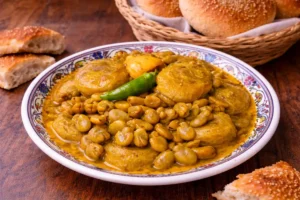
Then the look of it. The sauce light in color. The artichokes still holding themselves. The fava beans tender, pale, almost shining. Then the table. Bread in the hand. No big talk. Just people eating.
That is when you understand this kind of dish. It is simple, yes. But it is not small.
In our kitchens, what makes a meal feel rich is not always meat. Many times, it is patience.
This is why the dish matters. It teaches something old. Something Moroccan. You do not need many things. You need balance. You need a little feeling. You need to know how to look at the pot. And when you know that, even spring vegetables can feed a house with dignity.
What Makes This Vegetarian Tagine Different
This one is different from the start. It is not that red vegetable stew, not that pot full of tomato, not that loose sauce running everywhere on the plate. No. This one stays light.
When I lift the lid, I want to see the vegetables first. I want to see the fava beans. I want to see the artichokes sitting there nicely. I want the sauce to stay low in the pot, just enough to hold the flavor, not enough to drown the whole dish. That is the beauty of it.
The dish is built on quiet things. Fava beans. Artichokes. Lemon. Cilantro. Garlic. A little ginger. A little turmeric. Black pepper. That is all. When these things are handled well, you do not need more. You do not need to make noise in the pot.
I like this kind of tagine because every ingredient keeps its face. The fava beans still taste green and full. The artichokes still taste delicate. The lemon gives life to the sauce. The cilantro gives that fresh smell that rises with the steam. The garlic is there in the background. Warm. Deep. Never too much.
And the sauce, ah, the sauce must behave. It should stay pale, short, soft, and full of taste, but never heavy. This is not a dish for too much water. If you pour too much, you kill it. It goes flat. The vegetables lose themselves. The sauce turns weak. You look into the pot and you feel nothing.
This tagine needs a careful hand with water. A little is enough. Let the vegetables give their own moisture. Let the pot work slowly. The artichokes need respect too. You cannot treat them roughly. If you keep stirring, they break. If the fire is strong, they go tired fast. Better to place them gently and leave them alone.
Let them cook in peace. I always say some dishes do not like to be bothered. This is one of them. When it is done right, you can see it before you taste it. The sauce looks clean. The fava beans are tender. The artichokes still hold their shape. Nothing is crushed. Nothing is swimming. The whole pot looks calm.
And that is what makes this tagine different. It is simple food. But it has balance. It has softness. It has manners.
Ingredients You Will Need
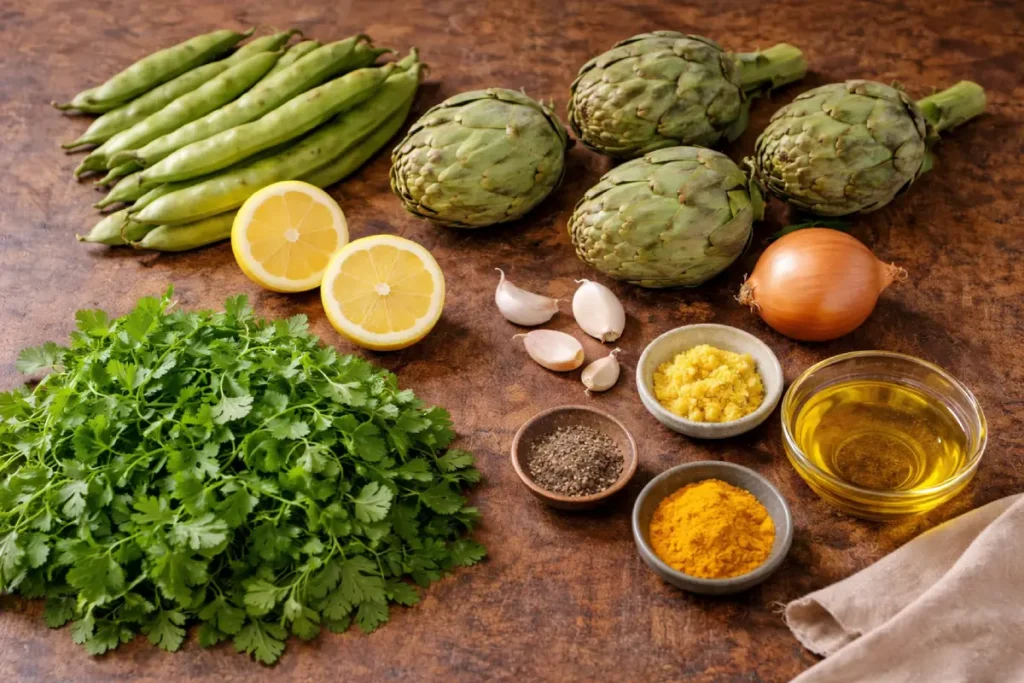
Before I start, I like to see everything in front of me. It settles the hand. It settles the mind too. This is not a crowded dish. The table should look simple when you gather what you need.
The vegetables first
Fresh fava beans. Fresh artichokes if you have them. If not, good artichoke bottoms will do. That is fine. Not every kitchen has the same ease.
For me, around 600 grams of fresh fava beans is about right. Enough to feel them in the pot. Enough to make the dish worth making. For the artichokes, 4 to 6 is good, once cleaned. Or about 6 prepared bottoms if that is what you bought. When I see them on the table, I already know the dish will be gentle.
The small things around them
Then the lemon. Fresh cilantro. One small onion. Two garlic cloves. These are small things, but they carry the dish.
The lemon does more than people think. Part goes in the pot. Part stays near your hand while you clean the artichokes. Once they are cut, they darken quickly. You turn your back for one minute, and they start losing that clean look. So I keep lemon close. Always.
The cilantro matters too. Not parsley here. Cilantro. That smell rising with the steam, that is part of the memory of the dish. The onion should stay quiet. One small onion is enough. You want it to melt into the sauce, not stand there announcing itself.
If later you want a sharper finish, the kind some homes love, you can use preserved lemon. I show that more clearly in How to Make Preserved Lemons (My Mother’s Method).
The quiet spices
You do not need much. One teaspoon of ground ginger. One teaspoon of turmeric. Half a teaspoon of black pepper. Salt as needed.
That is enough for this kind of pot. I do not like to crowd it. The artichokes are delicate. The fava beans have their own taste. If you throw too many spices at them, you stop hearing the dish.
The oil and the water
I use two tablespoons of olive oil and one tablespoon of neutral oil. That balance feels right to me. The olive oil brings depth. The other oil keeps everything easy and soft.
And the water, warm water, not cold. About 1 to 1 1/2 cups, but even here, I do not like to talk too hard in numbers. Start gently. Watch the pot. This dish should not swim. It should cook with just enough moisture to soften the vegetables and leave you a short sauce at the end.
Before you move to the fire
Look once more at the table. The beans. The artichokes. The lemon. The cilantro. The little pile of spice. Nothing grand. Nothing expensive. But already, if you know this kind of cooking, you can almost smell the pot before it starts.
That is how many good Moroccan dishes begin. Quietly.
Disclosure: This article contains affiliate links. If you buy through them, I may earn a small commission at no extra cost to you.
A Few Tools That Help
You do not need many things for a dish like this. But a few simple tools make the work easier, especially when you are steaming the fava beans, trimming the artichokes, and keeping the heat gentle under the pot.
- Tagine Pot or Dutch Oven — For a dish like this, I like to leave the choice to you. A clay tagine gives the pot that slow, gentle feeling, while a good Dutch oven is often easier to live with in an everyday kitchen. Shop a tagine pot | Shop a Dutch oven
- Heat Diffuser Plate — If you cook in a clay tagine, do not forget the heat diffuser underneath. It matters. It helps protect the pot and keeps the heat soft and steady.
Shop the heat diffuser plate
- Steamer Pot — I like having a simple steamer for this dish, because the fava beans get a gentle start before the real cooking begins.
Shop the steamer pot
- Paring Knife — A small paring knife helps with the careful work here, especially when you need to lightly score the fava beans and trim the artichokes.
Shop the paring knife
- Lemon Squeezer — A hand lemon squeezer is useful here, especially for the lemon water that keeps the artichokes fresh and pale.
Shop the lemon squeezer
- Glass Bowls — A few glass bowls help keep the small things in order, especially when you want the artichokes resting in lemon water and the other ingredients close at hand.
Shop the glass bowls
This article may contain affiliate links. If you buy through them, I may earn a small commission at no extra cost to you. Thank you for supporting my kitchen
How to Prepare the Fava Beans
This part matters. A lot.
If you treat the fava beans carelessly, the whole dish feels different later. The sauce gets darker. The taste stays a little rough. You feel it in the mouth. Not bad, maybe. But not clean. Not the way this dish wants to be.
Lightly Score Them First
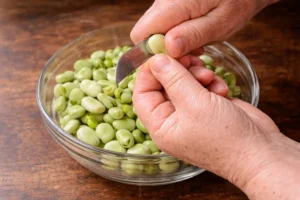
First, wash the fava beans well. Take your time here. Move them in the water with your hands. Let any dust or field dirt come away. When they are clean, put them in front of you and take a small knife.
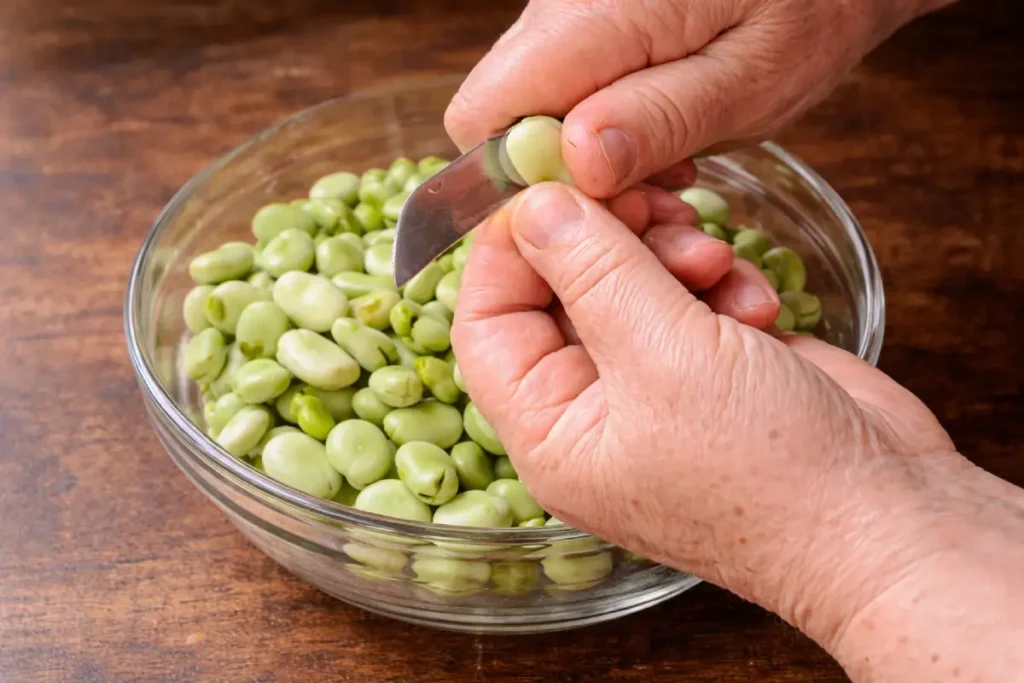
Now open each one just a little. Just a little. A light slit with the tip of the knife. Enough to mark them. Enough to help them open to the steam later. Do not cut them in half. Do not go deep. This is not that kind of work.
I like to do this quietly, one by one. The bowl on one side. The knife in the hand. The apron already picking up that green smell from the beans. It is a small step, but it changes the cooking.
Steam Them in a Couscoussier Until Partly Cooked
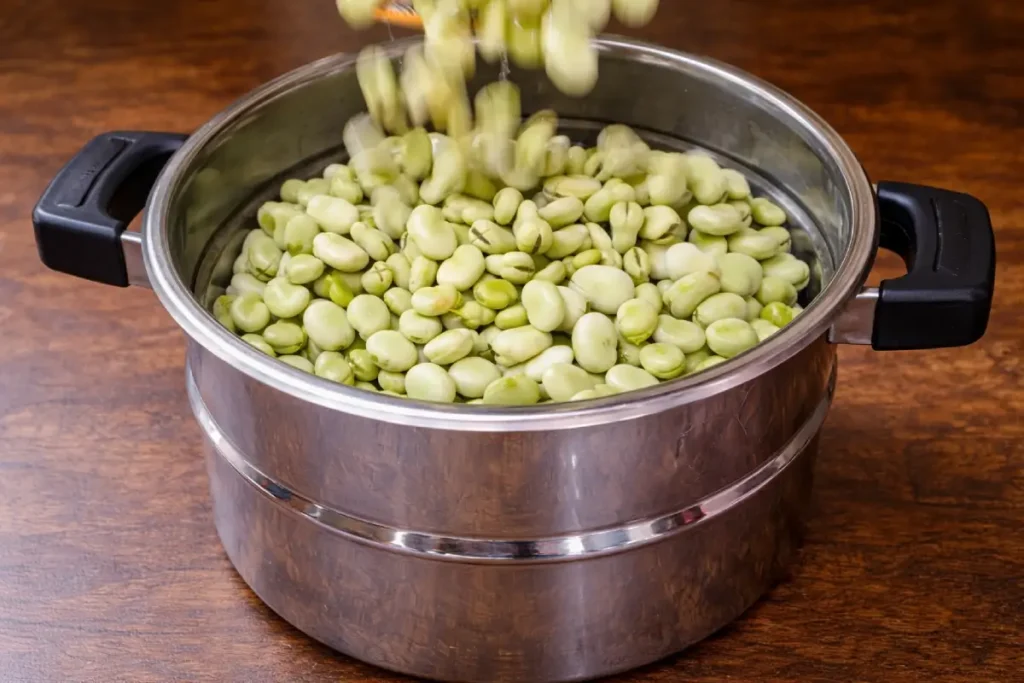
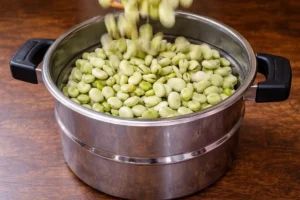
Once they are scored, put them in the couscoussier over simmering water. If you do not have one, a steamer basket is fine. What matters is the steam. Let the water murmur underneath. Not a wild boil. Just enough heat to send the steam up through the beans.
Leave them there until they are partly cooked. Not fully soft. Not ready to eat. Just started. Just opened. Just enough for the dish to move in the right direction.
This is an old kitchen step, and I respect it. My mother did not skip it. She used to say the beans need this first breath of steam. It takes away that harsh, raw edge. It helps them keep their pale color. And later, when they go into the pot, it helps the sauce stay light and clean instead of turning dark.
Some steps do not look important when you read them. But in the pot, they make all the difference.
When the beans come out, you can already feel it. They smell softer. They look calmer. The dish has already begun, even before the real cooking starts.
How to Prepare the Artichokes
The artichokes need a calm hand.
I do not rush them. I never do. This is one of those vegetables that can turn on you quickly. One minute they look beautiful on the board. The next minute they start going dark, and the whole dish loses that clean, soft look we want.
Trim and Clean Them
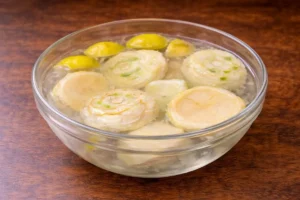
First, get a bowl of water ready with lemon in it. Do that before you touch the artichokes. Not after. Before. It should be waiting for you on the side.
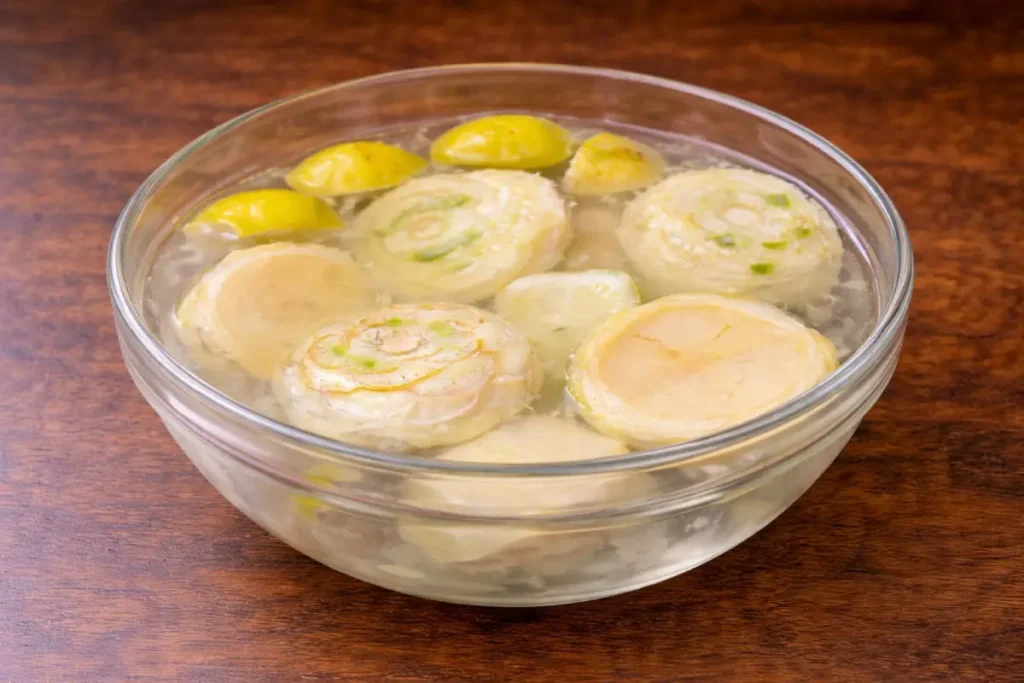
Then start cleaning them one by one. Pull away the hard outer leaves. Trim the rough parts. Cut away what is tough and stringy. Keep only what will turn tender in the pot. As you work, your fingers get that faint green smell. A little bitter. A little fresh. The knife gets sticky. The board gets wet. This is normal.
And each time one artichoke is cleaned, drop it straight into the lemon water. Do not leave it sitting there on the board while you move to the next one. Straight into the water. That is the safe place for it.
Why Lemon Matters Here
Lemon matters a lot with artichokes. Once they are cut, they darken quickly. Very quickly. You turn your back, you wash a knife, you answer somebody in the kitchen, and already the color starts changing.
I do not like that in this dish. This tagine wants to stay light. It wants that pale, clean face when you lift the lid. The lemon helps protect that. It holds the color. It keeps the artichokes looking fresh. And later, when the dish is cooked, it helps the whole pot feel brighter and more cared for.
My mother always kept lemon close when artichokes were on the table. She did not make a speech about it. She just did it. That is how these things are passed down. Not with big explanations. Just the hand moving the right way at the right time.
If you want a light tagine, start by protecting the color of the vegetables.
When the artichokes are cleaned and resting in that lemon water, the work already feels easier. You look at them and they still look alive. Pale. Fresh. Ready for the pot. That is exactly what you want.
How to Make This Vegetarian Tagine
Now the pot begins for real.
By now, everything should be waiting for you. The fava beans have had their steam. The artichokes are cleaned and sitting in lemon water. The onion is grated. The garlic is crushed. The cilantro is there. The spices are near your hand. I like this moment. The kitchen is still quiet. The dish is not cooked yet, but you can already feel it coming.
1. Build the Base
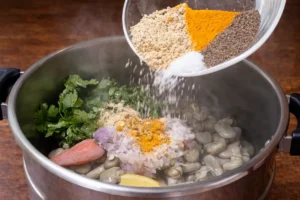
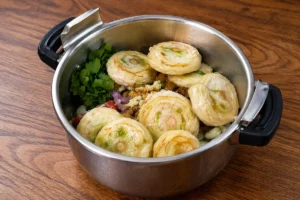
First, I put the fava beans in the pot. They go down first. Then I scatter in the grated onion, the garlic, the cilantro, the lemon wedge, the ginger, the turmeric, the black pepper, the salt, and the two oils.
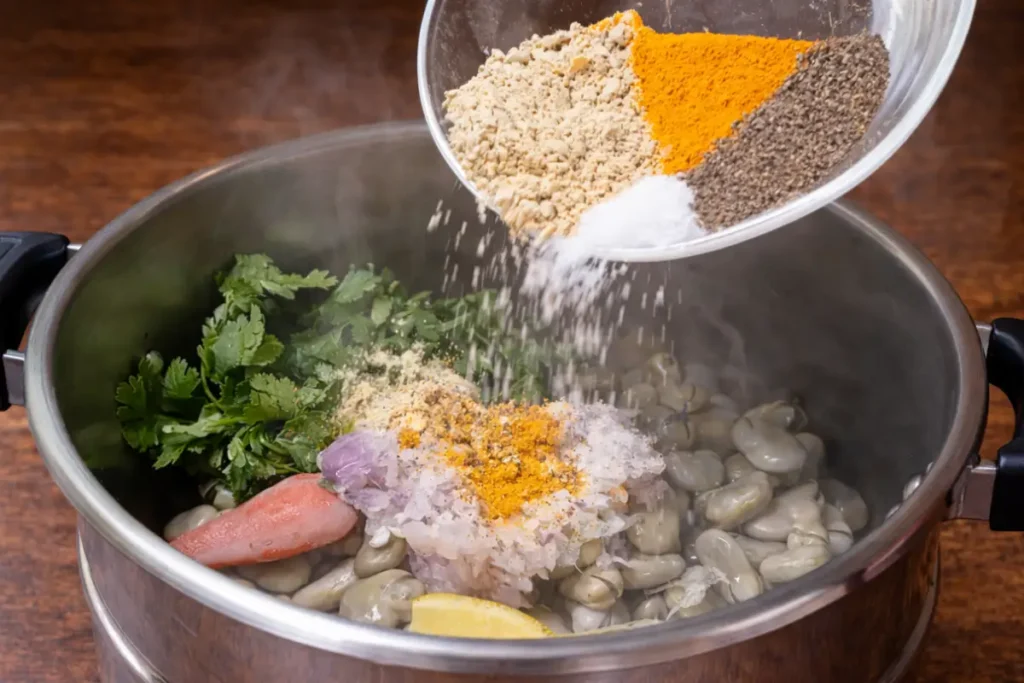
When I look into the pot, I want to see everything resting naturally. Nothing forced. The turmeric already gives that soft yellow color. The oil catches the light. The onion sits against the beans and you know it will melt later and disappear into the sauce. It is still a raw pot, yes. But already it smells like lunch is on its way.
2. Add the Artichokes
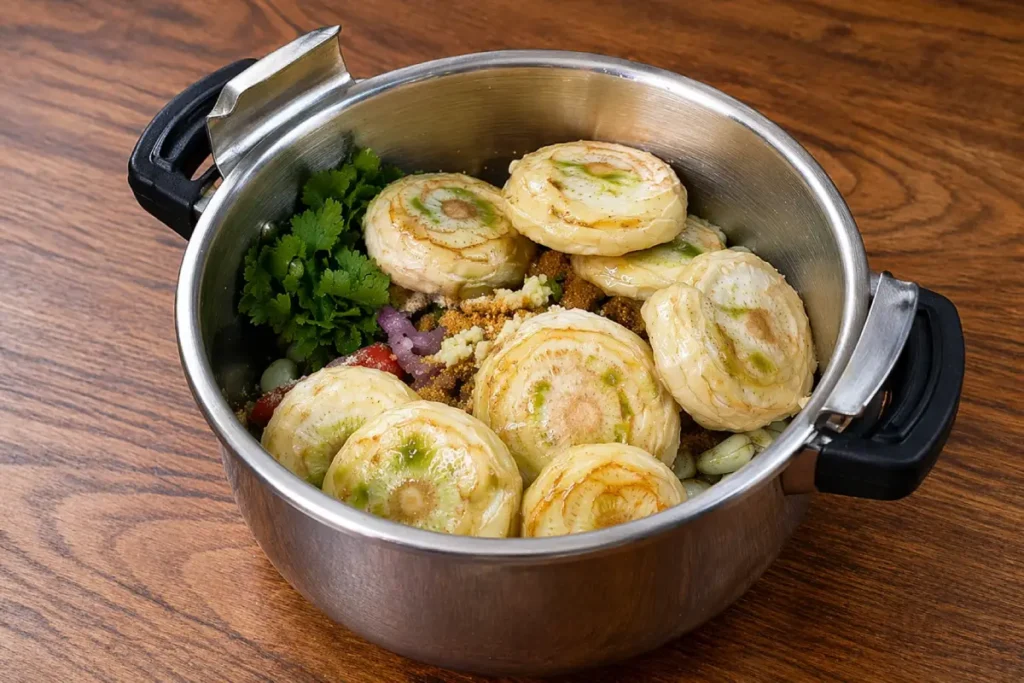
Then I take the artichokes from the lemon water and place them gently into the pot. One by one, if needed. I do not throw them in. I do not press them hard. I just set them where they fit nicely, over the beans or between them.
This part should feel calm. If the pot looks rough now, it often stays rough later. The artichokes are delicate. You must begin with a soft hand if you want them to finish with a good face.
3. Add Just Enough Warm Water
Then the water. Warm water. A little only. Enough to help the cooking start. Enough so the bottom does not catch. But not enough to make the vegetables float.
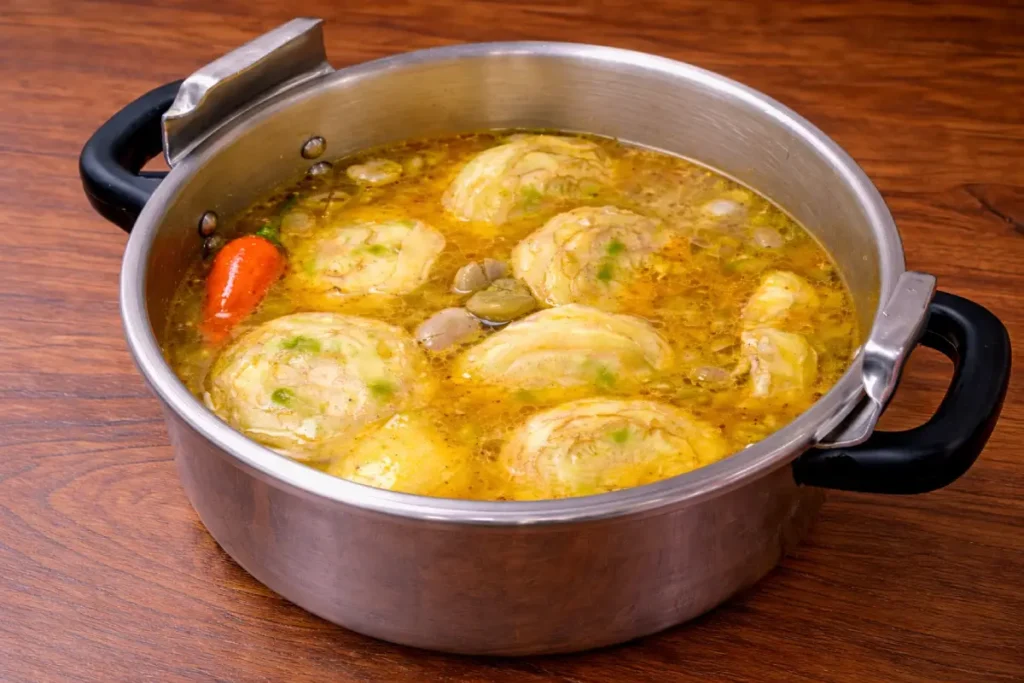
This dish should never swim. That is something I always keep in mind. You are not making a big broth here. You are waiting for a short sauce, the kind that stays close to the vegetables and takes their taste little by little. Too much water, and the whole thing opens too far. The flavor weakens. The dish loses its shape.
4. Simmer Gently
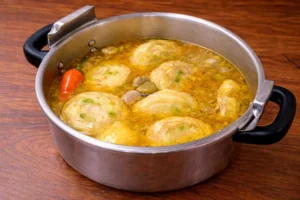
Now cover the pot and let it cook on a calm fire. Low, or low-medium. Nothing strong. Nothing angry. Just the soft sound of the cooking starting to move. A little bubbling. A little steam finding its way out. The kind of sound you hear when the kitchen is doing honest work.
This is the part I never rush. The fava beans still have to finish. The artichokes need time to soften without breaking. The onion melts. The cilantro drops into the sauce. The smell starts climbing into the air. Garlic. Lemon. Warm spice. The apron begins to catch it. The whole kitchen changes little by little.
5. Do Not Stir Too Much
Once the artichokes are in, I leave the pot alone as much as I can. This is not a dish for busy hands. If you keep stirring with a spoon, the artichokes will break. Then the pot loses its beauty.
If I need to help it, I move the pot gently. Just a small shake. Just enough. Some dishes do not like to be bothered too much. This is one of them. Better to trust the slow fire and let the vegetables stay where you placed them.
Leave the artichokes in peace. They soften better that way.
6. Finish When the Sauce Tightens
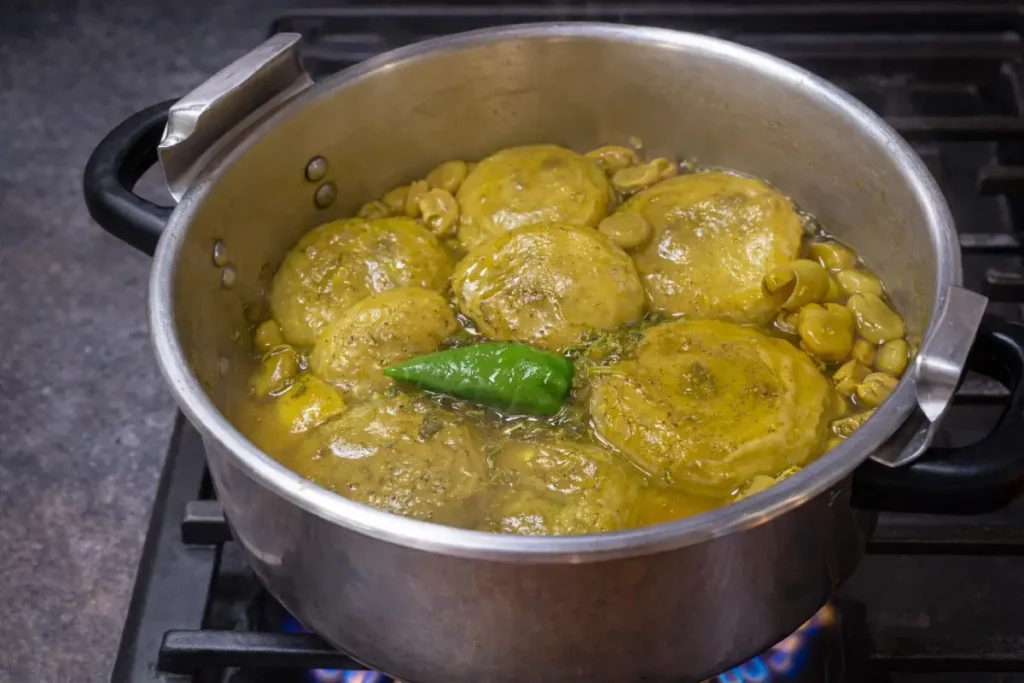
Toward the end, open the pot and look properly. Not just one quick look. Look at the beans. Look at the artichokes. Look at the sauce.
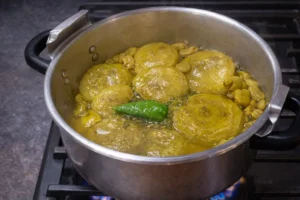
The fava beans should be tender now. The artichokes should be soft, but still holding themselves. The sauce should look pale, light, a little silky, not loose and not watery. It should sit around the vegetables like it belongs there.
That is when I stop. Not because of the clock. Because the pot has reached its point. You see it. You smell it. You feel the dish has settled. And when that happens, there is nothing more to do except bring the bread close and get ready to eat.
How to Know It Is Ready
With a dish like this, I do not stand there with the clock in my hand. I stand with the lid in my hand.
I open the pot. The steam comes up. My apron catches the smell. First thing, I look at the fava beans. They tell me a lot. If they still look tight, if they still have that hard green look, I close the pot and give them more time. Sometimes I take one between my fingers. Sometimes I taste one. If it still has that raw bite, then the dish is not there yet.
Then I look at the artichokes. Always the artichokes. They are delicate. I want them soft, but I do not want them tired. I do not want them torn up in the sauce. They should still be holding themselves, like they know where they are. Tender, yes. Broken, no.
Then my eyes go to the sauce. It should stay light. That matters. Light in color. Not dark. Not muddy. And not too much of it. This is not the kind of pot where you want a lot of broth at the bottom. No. Just enough sauce to sit around the vegetables and carry the taste. Just enough for the bread later.
And the smell, ah, the smell says the truth before the mouth does. By then the garlic has softened. The cilantro has fallen into the sauce. The lemon is there, but gently. The ginger and turmeric come up in a warm, quiet way. Nothing smells sharp. Nothing smells raw. The whole kitchen starts feeling ready.
I also watch that little shine in the sauce. A little oil is good. Beautiful, even. But it should sit naturally in the pot, not float away from the sauce like it has separated. When everything comes together, the sauce looks soft and a little glossy. That is a good sign.
Then there is a moment. A small moment. You look into the pot and everything seems calm. The beans are soft. The artichokes are settled. The sauce has tightened. The smell is right. And inside yourself, you say, yes. Now. That is enough. Not one minute more.
Small Tips From a Moroccan Kitchen
There are small things in this dish. Quiet things. But they make all the difference.
I never skip the steaming step for the fava beans. Never. It gives them a head start. It wakes them up gently. If you throw them in without that step, sometimes they stay stubborn inside, even when the outside looks ready. I learned that the hard way, years ago, in a small kitchen where the windows stayed wet from steam and my sleeves smelled like parsley all afternoon.
And the artichokes, keep them in lemon water until the very last moment. I do this almost without thinking now. Peel one, trim one, drop it in. Peel one, trim one, drop it in. It keeps them fresh-looking, yes, but also calm somehow. They do not darken. They do not lose their beauty before they even reach the pot.
Use warm water. Not cold. This matters more than people think. Cold water slows everything down. It shocks the pot. Warm water keeps the cooking steady, gentle, even. When I pour it in, I want the dish to keep moving forward, not stop and catch its breath again.
And do not rush the reduction. This dish does not like impatience. You hear the little bubbling. Not loud. Not wild. Just that soft sound. Like the sauce is slowly finding itself. If the fire is too strong, everything gets confused. The vegetables tire. The sauce turns rough. Better to wait. Better to let it come together in its own time.
Once the artichokes start to soften, I touch the dish as little as possible. This is not the moment for stirring and fussing. No. Maybe a gentle shake of the pot, nothing more. Artichokes can break your heart when they fall apart at the end. So I leave them some peace.
This is one of those dishes that asks for a quiet fire and a patient hand.
That is really the whole story. Not a difficult dish. Not a showy dish. But it asks something from you. A little attention. A little restraint. A little trust. You stay nearby. You watch the sauce. You breathe in the smell on your apron. And slowly, very slowly, the pot becomes what it is meant to be.
Common Mistakes to Avoid
This dish is gentle. That is where people make mistakes. They treat it like something strong. Something that can handle rough hands. It cannot.
Skipping the steaming step is one of the first mistakes. I know why people do it. They want to save time. They think the pot will do the rest. But no. The fava beans need that first soft start. Without it, they can stay stubborn inside. You think they are done. You taste one. Still hard in the middle. Still carrying that raw, green feel. It is disappointing every time.
Cutting the artichokes too early is another one. I never rush that part. Once they are cut, they start changing fast. The color goes dull. They lose that fresh, clean look. So I keep them in lemon water and leave them there until the pot is ready for them. That way they go in bright, not tired.
Then there is the water. Too much water is a common problem. Very common. People get nervous. They look at the pot and think, maybe it needs more. Usually, it does not. This dish is not supposed to swim. The sauce should stay close to the vegetables, not drown them. If you pour too much, you spend the rest of the cooking trying to fix what did not need fixing.
And stirring. Ah, this one. Stirring too much ruins many beautiful pots. I understand the temptation. You want to help. You want to check. You want to make sure nothing sticks. But artichokes do not like busy hands. Fava beans too, once they soften, can lose their shape. So I do less. I give the pot a light shake if needed. That is enough. Let the dish hold itself together.
Cooking too fast is the last mistake, and maybe the one behind all the others. A strong fire makes people feel like something is happening. Yes, something is happening. But not the right thing. The sauce stays thin. The vegetables get pushed too hard. The whole dish feels restless. This one needs calm. A quiet simmer. Small bubbles. The kind of cooking where you stand close, smell the steam on your apron, and let the sauce slowly come home to itself.
If the fire is too loud, the dish loses its manners.
That is how I think of it. This is not a difficult dish, but it asks for patience. A little care at the right moments. A little restraint. And when you give it that, it gives you back something soft, elegant, and deeply comforting.
Moroccan Variations You May Also See
This dish has sisters. Cousins. Little household turns. That is how Moroccan cooking lives. One kitchen leans one way, another kitchen leans another, and still the soul of the dish stays there.
Sometimes the same combination comes with meat or chicken. I understand that very well. Artichokes and fava beans sit beautifully with lamb, beef, or chicken, and that version is very common in Moroccan home cooking too. If you want that deeper, fuller family-style version, you may also enjoy Best and Easy Beef Tagine Recipe with Artichokes & Fava Beans. You will also find this same pairing of artichokes and fava beans cooked with lamb, beef, or chicken in many Moroccan homes.
Some cooks like a sharper edge. More cut. More brightness. That is where preserved lemon enters the room. Not always, but often enough that you will see it from house to house, especially when someone wants the dish to taste a little more lifted and a little more saline. In some homes, preserved lemon is the little thing that sharpens the whole dish and gives it a brighter edge.
And then there is the spring table. That version makes perfect sense to me. A handful of peas slips in easily beside the fava beans and artichokes, and suddenly the dish feels even more like the market in March or April, green piled on green. In spring, some cooks slip in a handful of peas, and it suits the dish beautifully.
As for the cooking vessel, families do what they have always done in their own homes. Some use the tagine base. Some use a regular pot. I have seen both all my life, and I never make a drama out of it. The clay has its beauty, yes, but a regular pot is also part of real kitchen life. Some families swear by the clay tagine, and others are perfectly happy with a regular pot.
What to Serve With It
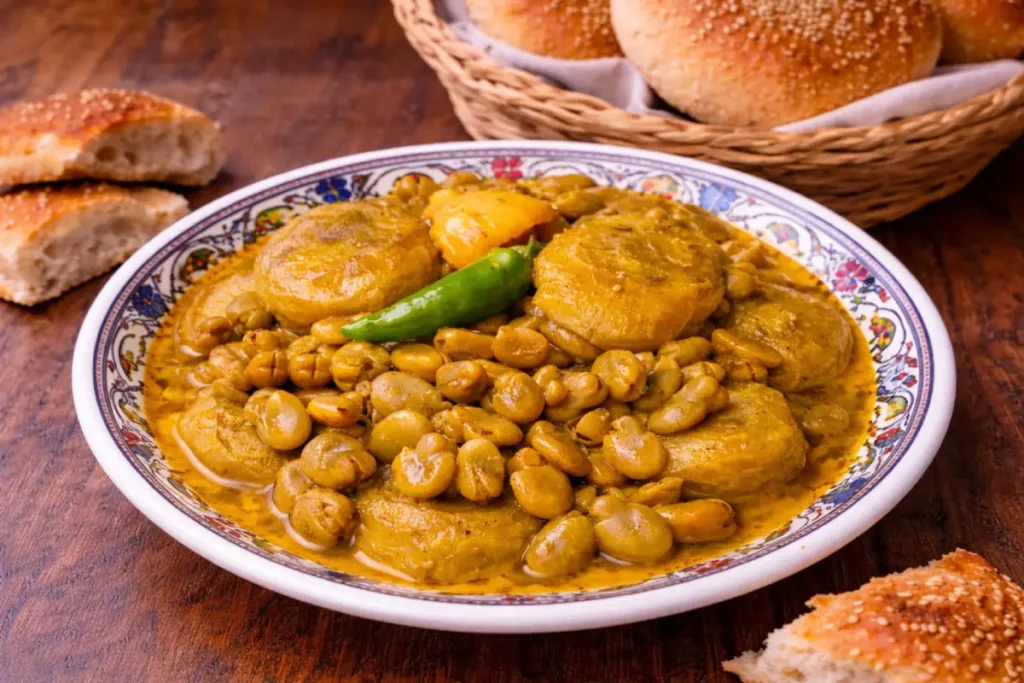
For me, the first thing is bread. Always bread. Moroccan bread is the natural companion here, the one that understands the sauce without needing anything explained. You tear a piece, still a little warm if you are lucky, and use it to gather the last of the juices from the plate. If you like to bring warm bread to the table with it, you may also enjoy A Taxi Driver’s Secret to Truly Amazing Moroccan Bread. In Morocco, a round loaf of khobz is what I reach for first with a dish like this.
It also sits very naturally at a family lunch. Not a complicated table. Not a heavy one. Just the dish in the middle, bread nearby, people leaning in a little, each one taking their share quietly. That is the kind of meal this feels made for. Moroccan bread is described across recipes and guides as an everyday table bread, central to shared family meals rather than something reserved for special occasions.
And on the side, I would not do too much. A simple salad is enough. Something fresh. Something with a little crunch, maybe tomato, cucumber, onion, a little cumin, a little olive oil, whatever the kitchen gives you that day. This dish already has its own softness, its own gentle sauce, so the side should stay light and respectful. Moroccan meal guides describe bread as the main accompaniment, which leaves room for a very simple salad rather than many side dishes competing with the main pot.
Storage and Leftovers
When we finish eating, I do not leave the dish sitting out for too long. I let it calm down a little, just enough so it is no longer steaming like a kettle, then I put it away. Not much later. Just a little rest, then into the fridge. That is the safer way, and honestly, it also keeps the dish cleaner in taste the next day.
I like to move the leftovers into small containers. Shallow ones. It is a small kitchen habit, but a good one. The food cools faster that way. More gently. More safely. I learned to prefer this because a big deep bowl holds heat inside for too long, even when the top already feels cool.
And I do not keep it forever. A few days, yes. After that, I stop trusting it. If I know we will not eat it soon, I freeze it early and put my mind at ease. Better that than forgetting it at the back of the fridge and feeling sorry later.
When it is time to warm it again, I do not half-heat it. I want the middle hot too. Not just the edges. Not just the sauce on top. I reheat it until the whole dish feels alive again, all the way through. That is how leftovers should come back to the table.
For clear food safety advice on cooling, storing, and reheating leftovers, you can read the USDA leftovers guidance.
This is not the romantic part of cooking. I know. But it is part of caring for the food. And caring for the people who will eat it tomorrow.
A Brief Nutrition Note
I do not like to turn a quiet dish into a lecture. But still, it is worth saying. Fava beans bring good things to the table. They are usually known for giving some protein, some fiber, and that steady, satisfying feeling that makes a simple lunch hold you well.
That is one reason this kind of dish feels so honest to me. You eat it with bread. Maybe a small salad nearby. And still it nourishes you in a very solid, humble way. Not heavy in a flashy sense. Just grounding. The kind of food that stays with you kindly.
If exact nutrition numbers matter to you, it is better to check a trusted food composition source than to rely on another blog repeating numbers from somewhere else. A good place to start is USDA FoodData Central.
That feels like the honest way with a dish like this. No big claims. No need to force anything. Just remember what the ingredient is known for, and if you want exact numbers, check a reliable database. That keeps the recipe warm, and the information honest.
Questions I Often Hear in the Kitchen
Can I use frozen artichokes or frozen fava beans?
Yes. You can. I still prefer fresh, of course. When the market is full and everything looks alive, I take fresh without thinking twice. But frozen works. On tired days, on busy days, on days when the season has already moved on. Just expect a softer result. A little less character in the texture. So I go gently with them. Less fuss. Less water. A softer hand.
Do I really need to steam the fava beans first?
For me, yes. I do. I would not leave that out. It is one of those quiet steps that does not look important at first, then saves you later. Without it, the beans can stay stubborn inside. You think they are done because the pot looks good. Then you taste one. Not ready. Still a little raw in the middle. It is a small step, but it gives peace to the whole dish.
How do I stop the artichokes from turning dark?
I work and drop. Work and drop. I trim one, then straight into lemon water. Then the next. I do not let them sit around on the board while I think about something else. Artichokes change quickly. They lose that clean, fresh color. And once they darken, even the mood of the dish changes a little. Keep the lemon water close. That is the easiest answer.
Why did my sauce come out thin?
Usually, it is too much water. Or too much fire. Sometimes both. This dish is quiet by nature. It does not want to boil hard. It does not want to swim. The sauce should stay light, yes, but still close to the vegetables. Not watery. Not loose. When this happens to me, I lower the heat, stop interfering, and let the pot gather itself slowly.
Can I make it ahead of time?
Yes, you can. And sometimes the next day it feels even more settled. More joined. The flavors sit together better. But when you warm it again, be kind to it. Especially the artichokes. By then they are very tender. I reheat slowly. I do not stir much. Just enough to bring it back to life without breaking its shape. That is all it needs.
From My Kitchen to Yours
I always like the end of this dish.
In the beginning, it looks so modest. A few artichokes. A handful of fava beans. Garlic on the board. Cilantro on my fingers. The apron already carrying that green smell. Nothing grand. Nothing noisy.
Then the pot begins its work.
Slowly. Very slowly.
The beans soften. The artichokes loosen. The sauce turns quiet and light and silky around them. I look into the pot and I feel that old little satisfaction. This again. This simple thing becoming enough. Becoming generous.
That is the lesson here, really. Not more water. Less. Not a hard fire. A quiet one. Not too much stirring. Just enough. A dish like this does not like being pushed around. I do less. I watch more. I put my hand on the lid. I listen to the little bubbling. I wait.
And I want to tell you, do not be afraid of it.
If you are patient, it will come together. If you are gentle, it will reward you. Taste a bean. Look at the artichokes. Smell the steam when you lift the lid. The dish tells you where it is. You do not need to fight it.
I think this is why I love these humble vegetable dishes so much. They start small. Almost too simple. And then, with care, they become something people remember. Something tender. Something generous enough to place in the middle of the table with pride.
So make it calmly. Serve it warm. Bring bread close. Let everyone eat while the sauce is still shining a little.
And when you take the first bite, you will see.
It was never “just vegetables.”
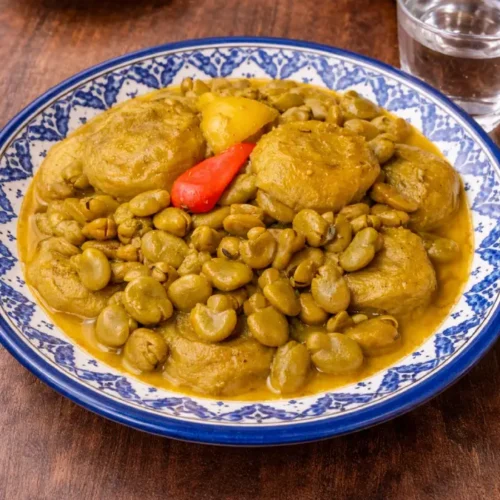
Authentic Vegetarian Tagine Recipe With Fava Beans and Artichokes
Equipment
- 1 Tagine base or heavy pot
- 1 Couscoussier or steamer basket
- 1 Small knife
- 1 Bowl for lemon water
Ingredients
- 600 g fresh fava beans
- 4 or 6 fresh artichokes, cleaned, or about 6 prepared artichoke bottoms
- 1 small onion, grated
- 2 garlic cloves, crushed
- 1 small bunch fresh cilantro, chopped
- 1 lemon, cut into wedges
- 1 tsp ground ginger
- 1 tsp turmeric
- 1/2 tsp black pepper
- Salt, to taste
- 2 tbsp olive oil
- 2 tbsp neutral oil
- 1 or 1+1/2 cup warm water
- Lemon water for holding the cleaned artichokes
Instructions
- Wash the fava beans well, then lightly score each one with the tip of a knife. Do not cut them deeply.

- Steam the fava beans in a couscoussier or steamer basket until partly cooked. This step helps them cook more cleanly and keeps the sauce pale.
- Prepare a bowl of water with lemon. Clean the artichokes one by one and place each one directly into the lemon water to keep them from darkening.
- In a tagine base or a regular pot, arrange the partly steamed fava beans first. Add the grated onion, crushed garlic, chopped cilantro, a lemon wedge, ginger, turmeric, black pepper, salt, olive oil, and neutral oil.
- Lift the artichokes from the lemon water and place them gently over the beans. Do not press them down roughly.
- Pour in the warm water. Use only enough to help the vegetables cook and form a short sauce. The dish should not be watery.
- Avoid stirring too much once the artichokes begin to soften. If needed, give the pot a gentle shake instead.
- Finish cooking when the sauce is light, slightly silky, and sitting close to the vegetables rather than pooling heavily at the bottom.
- Serve warm with Moroccan bread.
Notes
- Do not skip the steaming step for the fava beans. It makes a real difference in texture and color.
- Keep the artichokes in lemon water until the last moment.
- Use warm water, not cold.
- Cook gently and do not rush the reduction.
- Once the artichokes soften, handle the dish as little as possible.
Nutrition Information
| Nutrient | Estimated amount per serving |
| Calories | 220–300 kcal |
| Protein | 8–11 g |
| Carbohydrates | 20–28 g |
| Fiber | 7–10 g |
| Total fat | 10–14 g |
| Saturated fat | 1.5–2 g |
| Sodium | 250–450 mg |
| Potassium | 500–700 mg |
| Vitamin C | 15–25 mg |
| Folate | 120–180 mcg |
Come Sit With Me Again
If this kind of cooking speaks to you, come a little closer. In my newsletter, I share the Moroccan dishes that stayed with me through the years, the quiet ones from family kitchens, market mornings, and simple tables where good food was made with patience and a careful hand. If you join me there, I will send you honest recipes, small kitchen lessons, and the kind of meals that do not need much to become generous.
Come Find Me There Too
If you enjoy this kind of quiet Moroccan cooking, you can also follow along on social media. That is where I share little moments from the kitchen, simple dishes, small cooking lessons, and the old flavors that stay close to the heart. It is another way to keep in touch, and to bring a bit of that warm kitchen feeling into everyday life.
Leave a Word From Your Kitchen
If you make this dish, I would be glad to hear how it came out in your kitchen. Tell me if you used fresh or frozen vegetables, if you served it with bread, or if it reminded you of a meal from your own home. These little notes help other readers too, and they bring warmth to the table long after the pot is empty.